
An unannounced visit can expose months of neglected records and unresolved hazards within minutes. The safest answer toI use a two-track test. The workplace how to prepare for an OSHA workplace safety inspection is to make readiness part of normal operations, not a frantic cleanup after an inspector reaches reception.
must be safe, and the records must prove the safety system works. A clear aisle cannot replace missing training evidence. A polished policy cannot excuse an exposed machine hazard.
First, confirm whether federal OSHA or an OSHA-approved State Plan has jurisdiction. State Plans must be at least as effective as federal OSHA, but they may use different or stricter requirements.
Build an OSHA Inspection Response Team
OSHA inspections normally occur without advance notice. They generally include an opening conference, a workplace walkaround, and a closing conference. The compliance safety and health officer, or CSHO, presents credentials and explains the inspection’s purpose and general scope.
Assign a company representative, employee representative, document controller, and trained backups. The company representative should understand operations without guessing. The document controller should retrieve files without disrupting the inspection.
My benchmark is a ten-minute retrieval drill. Any trained backup should find a core compliance record within ten minutes. This is not an OSHA rule. OSHA’s Field Operations Manual states that employers generally have four business hours to provide requested injury and illness records, but the walkaround may begin first.
That drill makes how to prepare for an OSHA workplace safety inspection measurable. If only one person can locate the records, the system is not ready.
Organize OSHA Compliance Records
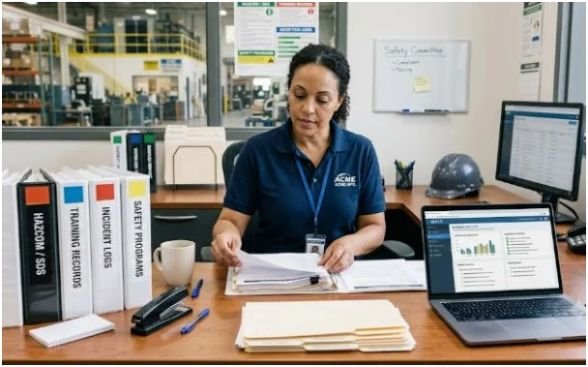
Create a central index showing each document, its owner, review date, storage location, and next deadline. Keep controlled digital copies and an accessible backup.
Review Forms 300, 300A, and 301
Covered employers use Form 300 for recordable cases, Form 300A for the annual summary, and Form 301 for incident details. These records generally must be retained for five years. Form 300A also has certification and posting requirements.
Compare the logs with incident reports, first-aid records, restricted-duty data, absence records, and workers’ compensation files. Correct genuine errors transparently. Never alter records simply to improve appearances.
Match Programs to Workplace Hazards
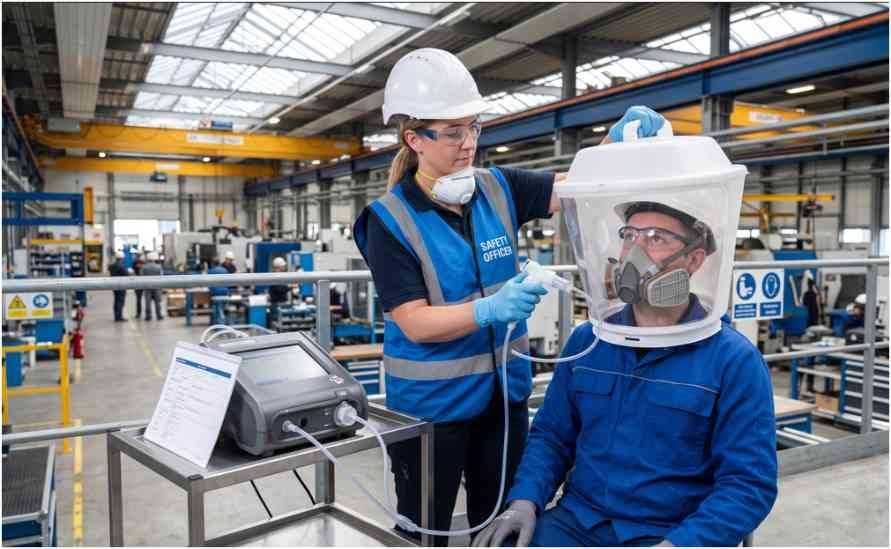
Required programs depend on actual exposures. Common examples cover hazard communication, emergency action planning, respiratory protection, and hazardous-energy control.
Where hazardous chemicals are present, OSHA requires a written hazard communication program, container labels, safety data sheets, and employee training.
For lockout/tagout, check machine-specific energy-control procedures, training, and periodic inspection certifications. OSHA explains that documented procedures are required in most covered situations, although the standard does not demand one blanket document titled “written LOTO program.”
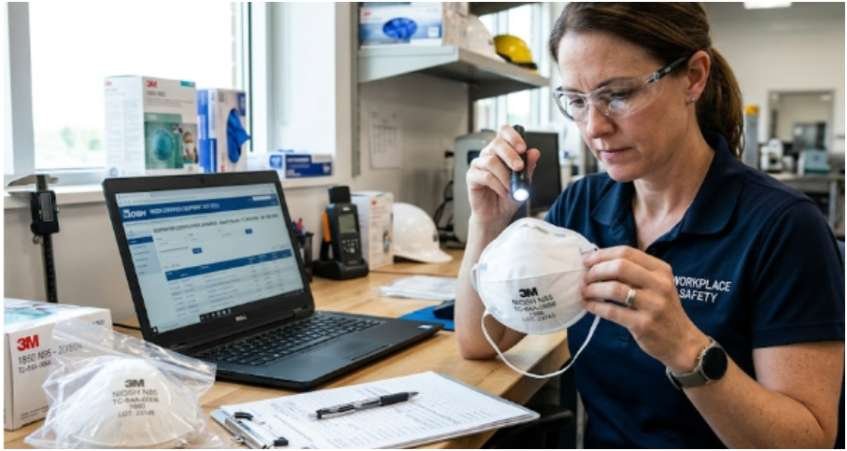
Respirator records should match the models employees use. Purchasing staff and supervisors should know how to verify a NIOSH-approved respirator before equipment reaches workers.
Conduct a Workplace Safety Compliance Audit

A reliable method for how to prepare for an OSHA workplace safety inspection follows the work, not only the building. Observe startup, production, cleaning, maintenance, material handling, and shutdown. Non-routine tasks often reveal hidden risks.
Inspect Common Physical Hazards
Check walking-working surfaces, exits, emergency equipment, machine guards, electrical panels, temporary wiring, chemical labels, ladders, storage systems, and personal protective equipment.
Keep electrical working space clear. Do not treat “36 inches” as universal for every panel. Required depth varies with voltage and installation conditions, although three feet applies in many common situations. OSHA requires access and working space that permits safe operation and maintenance.
Remove blocked exits, damaged cords, daisy-chained power strips, unlabeled secondary containers, and defeated guards. Fix visible defects, but do not let housekeeping hide deeper failures in exposure control or training.
Track Findings to Closure
The strongest system for how to prepare for an OSHA workplace safety inspection uses a live corrective-action register. Record the hazard, location, risk level, temporary protection, permanent fix, owner, due date, and closure evidence.
Attach revised procedures, purchase orders, maintenance records, training rosters, or verification results. OSHA’s current safety-management material recommends a formal written plan for tracking corrective actions until completion.
Prepare Employees for OSHA Interviews
Workers should know how to report hazards, locate safety data sheets, describe emergency procedures, and identify required protective equipment. They also have the right to raise safety concerns without retaliation.
Do not script answers or tell workers what to hide. OSHA may interview employees privately. Train people to answer honestly, briefly, and from personal knowledge. “I do not know” is better than an invented answer.
Run short readiness drills. Ask an operator to explain a guard, a chemical user to locate the SDS, and maintenance staff to describe energy isolation. This turns how to prepare for an OSHA workplace safety inspection into a test of behavior, not paperwork.
Follow a Day-of OSHA Inspection Protocol
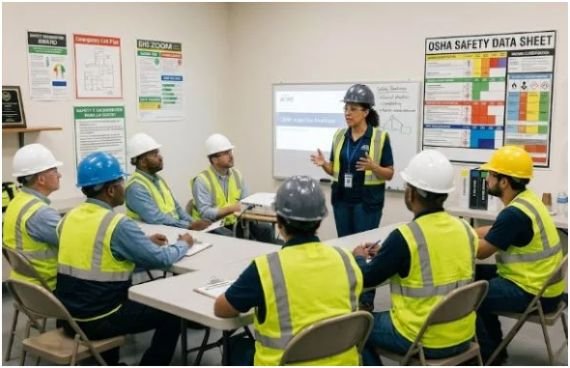
When the CSHO arrives, remain professional. Ask to see credentials, notify the response team, and move the opening conference to a suitable room. Do not cause an unreasonable delay while waiting for a preferred manager.
Manage the Opening Conference
Listen carefully to why OSHA selected the site and which areas or records fall within the expected scope. Identify employer and employee walkaround representatives.
Workers may authorize an employee representative or, when reasonably necessary for an effective inspection, a non-employee representative.
Answer direct questions accurately. Avoid speculation. Consider qualified counsel for a fatality, warrant, trade-secret dispute, or complex multi-employer inspection.
Document the Walkaround
Take side-by-side notes and capture the same conditions the inspector photographs, measures, or samples. Record timestamps, equipment status, employee activity, and temporary conditions.
OSHA officers may take photographs, collect samples, and privately question people. Trade-secret information receives legal protection.
Correct straightforward hazards immediately when safe. Do not destroy evidence or obstruct the inspection. OSHA may mark qualifying hazards as corrected during inspection, and some immediate corrections can qualify for its Quick-Fix incentive.
Act After the Closing Conference
Ask which apparent hazards need urgent attention, what documents remain outstanding, and how OSHA will communicate next steps. Preserve notes, assign owners, and begin correction without waiting for formal citations.
No Panic, No Theater—Just Proof
The real skill behind how to prepare for an OSHA workplace safety inspection is making inspection day resemble an ordinary workday. Safe conditions, accurate records, informed employees, and closed corrective actions create credible readiness.
I recommend starting with one high-risk task this week. Trace it from the written procedure to the training record and then to actual worker behavior. When those three points match, your safety system has proof—not just promises.
Frequently Asked Questions
1. What documents should be ready for an OSHA inspection?
Prepare applicable OSHA logs, training records, SDSs, written programs, equipment inspection records, and proof of completed corrective actions.
2. Can OSHA interview employees privately?
Yes. OSHA may privately question employees about hazards, incidents, training, or previous concerns.
3. Should an employer fix hazards during an OSHA inspection?
Yes, when correction is safe and does not disturb evidence; document the fix because OSHA may note it as corrected during inspection.
4. Are OSHA workplace safety inspections always unannounced?
They normally occur without advance notice, although OSHA allows limited exceptions.