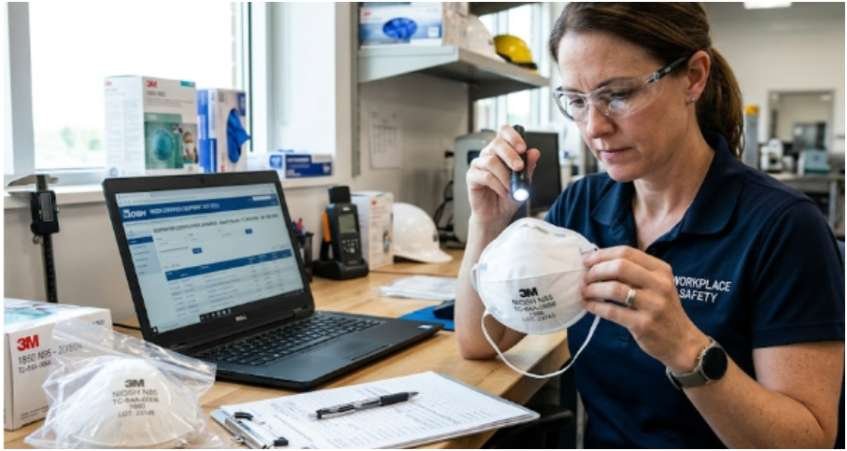
A respirator can display “N95” and still fail an authenticity check. When I explain how to verify a NIOSH-approved respirator, I use a three-way match: the facepiece, package label, and government record must describe the same product. A logo or TC number alone is not enough.
NIOSH evaluates respirators used in U.S. workplaces. Every approved respirator has a Testing and Certification number, while the Certified Equipment List is the official registry.
For quick reference, how to verify a NIOSH-approved respirator comes down to matching five details.
Quick NIOSH Respirator Verification Table
| Check | What Should Match | Warning Sign | Action |
| Facepiece | NIOSH, TC number, filter class, approval holder, and part number | Missing, altered, or misspelled markings | Do not treat it as approved |
| Packaging | Approval label and user instructions | Conflicting or absent details | Compare it with the CEL |
| CEL record | TC number, manufacturer, model, facepiece type, and protection | Number belongs to another product | Reject or quarantine it |
| Design | Expected straps and construction | Ear loops, decorations, or “child N95” claims | Investigate before use |
| Fit | Correct model, size, and seal | Gaps, slipping, or facial-hair interference | Select another option |
These checks reflect NIOSH labeling, counterfeit-screening, database, and fit requirements.
Step 1: Inspect the Required Respirator Markings
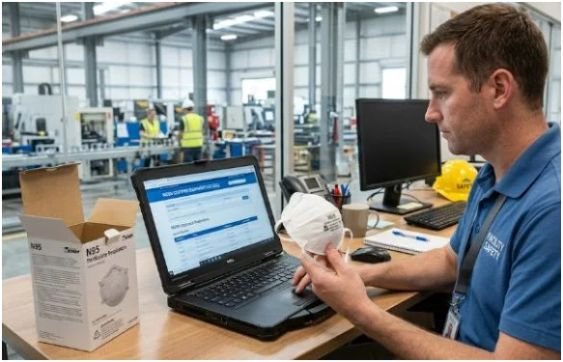
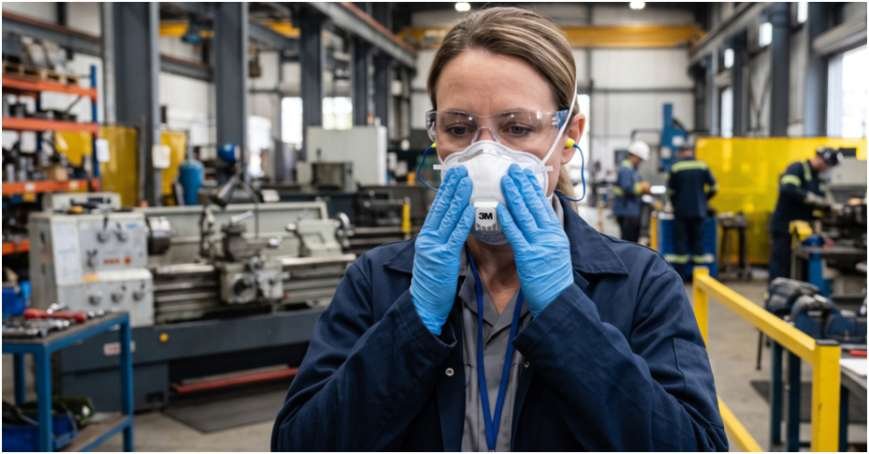
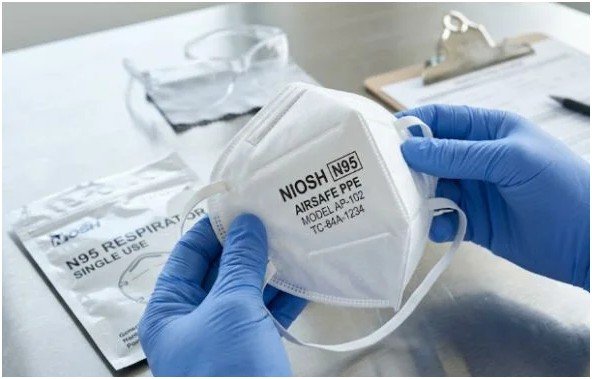
The first step in how to verify a NIOSH-approved respirator is inspecting it under good light. An approved filtering facepiece should show the approval holder, part number, filter class, TC approval number, and “NIOSH” in capital letters. A lot number may appear on the respirator or packaging.
For an N95 filtering facepiece, expect a number formatted like TC-84A-XXXX. Other respirator categories use different approval schedules, so not every legitimate device begins with 84A.
Check the Part Number, Not Only the Brand
A brand may sell many respirators. The part number identifies the exact product more accurately. I record the TC number, approval holder, part number, filter class, and facepiece type before searching.
Typos, uneven printing, missing numbers, or a blank facepiece should stop the check. NIOSH states that a filtering facepiece respirator missing required label components is not approved.
Step 2: Compare the Packaging Approval Label
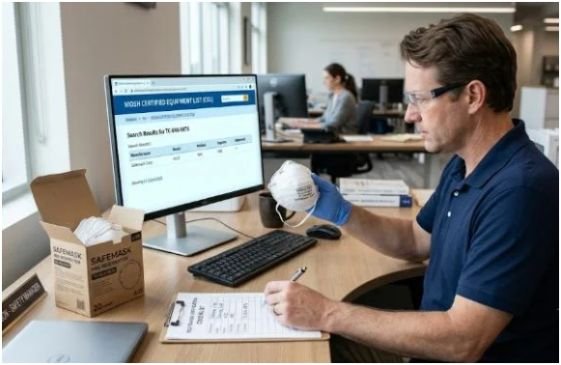
Learning how to verify a NIOSH-approved respirator also means checking the box or bag. Every approved respirator comes with an approval label on or within its packaging. The label identifies the TC number and approved protection type.
Compare the label with the facepiece. The manufacturer details, numbers, filter class, and product identity should agree. Keep the user instructions because the respirator must be used in its approved configuration.
A private-label product may legitimately use the original manufacturer’s approval number. Use the CEL advanced search because private-label names may not appear in the basic manufacturer list.
How to Verify a NIOSH-Approved Respirator in the CEL
The strongest answer to how to verify a NIOSH-approved respirator is the NIOSH Certified Equipment List, commonly called the CEL. Search the TC number using the approval code and four digits, such as 84A-XXXX.
No active result means you should not use the product as NIOSH approved. NIOSH recommends using the advanced search when investigating obsolete approvals.
Apply the Three-Match Rule
Do not stop when the TC number produces a result. Compare the facepiece identity, packaging identity, and CEL identity.
The approval holder, part or model number, protection class, facepiece type, and product line must tell the same story. A difference in even one major detail requires further investigation.
This safeguard matters because counterfeiters may copy real approval numbers. NIOSH documented a counterfeit product displaying TC-84A-0427, although that approval belonged to a 3M full-facepiece respirator with cartridges. The number existed, but the product did not match.
Step 4: Spot Counterfeit Respirator Red Flags
A reliable process for how to verify a NIOSH-approved respirator includes checking its design and sales claims. Most approved N95 respirators use two headbands. Ear loops without a connector behind the head are a warning sign, although NIOSH does not describe them as automatic proof of counterfeiting.
Decorative materials, poor printing, copied certification marks, or an unknown approval holder deserve scrutiny. A claim such as “NIOSH-approved KN95” is also misleading because KN95 is not a NIOSH approval class.
A “child N95” approval claim is another major warning. NIOSH states that it does not approve respiratory protection for children.
Save the seller page, receipt, product photos, packaging photos, model details, and TC number when a product appears suspicious. Suspected counterfeit or misrepresented respirators can be reported to NIOSH at ppeconcerns@cdc.gov.
Step 5: Separate Approval From Protection
Knowing how to verify a NIOSH-approved respirator confirms authenticity, not suitability for every hazard. An N95 filters particulates. It does not automatically protect against gases, vapors, or oxygen-deficient environments. Respirator selection must match the documented workplace hazard.
Selection also depends on facepiece type and assigned protection. Readers comparing reusable options should understand half mask vs full face respirator protection before choosing equipment.
Approval Does Not Replace Fit Testing
A genuine respirator can still leak. OSHA requires fit testing before workplace use of a tight-fitting respirator, whenever the model, style, or size changes, and at least annually. A user seal check is also required each time the respirator is put on.
Facial hair across the sealing surface can interfere with fit. A CEL match cannot fix a poor seal, damaged straps, the wrong size, or incorrect donning.
How to Verify a NIOSH-Approved Respirator: Worked Example
Suppose an N95 shows “NIOSH,” TC-84A-XXXX, a manufacturer name, and a part number. I first compare those markings with the package approval label. I then search 84A-XXXX in the CEL and open the approval details.
The identity check passes when the record lists the same approval holder, N95 protection, filtering-facepiece design, and model line.
I stop the check when the CEL lists another manufacturer, a full-facepiece respirator, or a different product line. The number may be valid, but it does not validate the product in my hand.
That comparison is the safest way to apply how to verify a NIOSH-approved respirator without blindly trusting packaging claims.
FAQs
1. Can a respirator have a real TC number and still be counterfeit?
Yes. Counterfeiters may copy valid numbers, so the manufacturer, model, protection level, and facepiece type must also match the CEL.
2. How do I check a NIOSH approval number online?
Enter the approval code and four digits in the official NIOSH CEL, open the result, and compare every product detail.
3. Are all N95 masks NIOSH approved?
No. The term “N95” proves nothing without the required markings and a matching CEL record.
4. Do ear loops mean an N95 is fake?
Not automatically, but most approved N95 respirators use two headbands, making unsupported ear loops a strong warning sign.
Don’t Let a Printed Number Boss You Around
The smartest approach to how to verify a NIOSH-approved respirator is to distrust shortcuts. Read the respirator, inspect the package label, search the CEL, and demand a complete identity match. Then confirm the model fits and suits the actual hazard.
My final tip is simple: verify before distributing, stocking, or wearing the respirator. Two minutes in the official database can prevent a dangerous false sense of protection.