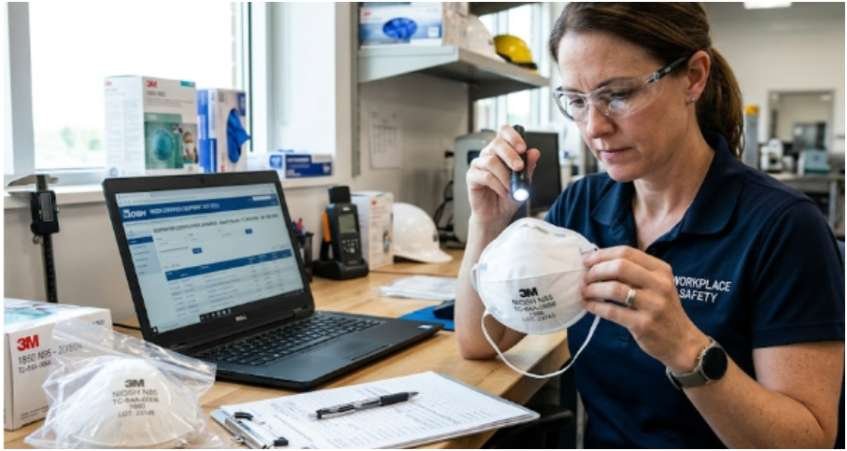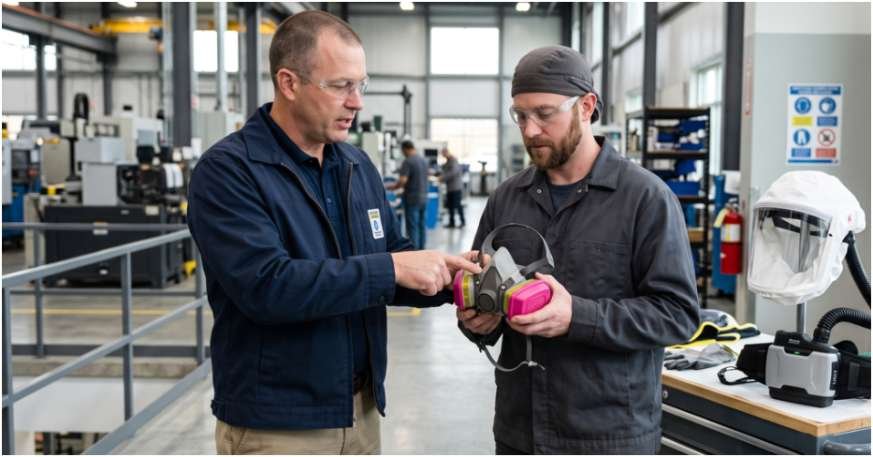
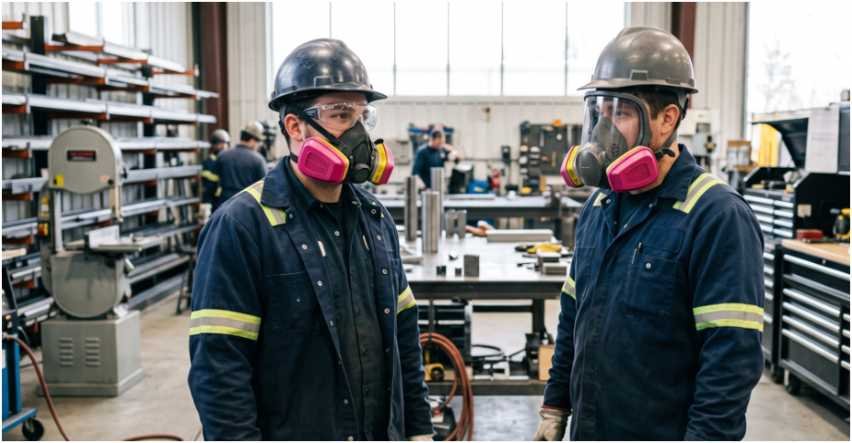
A respirator can look substantial and still provide the wrong protection. The key difference in half mask vs full face respirator protection factors is direct: OSHA gives a negative-pressure half-mask air-purifying respirator an APF of 10 and a full facepiece an APF of 50. That fivefold gap matters only when the respirator fits, the cartridge matches the hazard, and the atmosphere is suitable for air-purifying equipment.
Half Mask vs Full Face Respirator Protection Factors at a Glance
| Comparison point | Half-mask APR | Full-facepiece APR |
| OSHA APF | 10 | 50 |
| Coverage | Nose and mouth | Eyes, nose, mouth, and face |
| Expected reduction | To 1/10 of outside concentration | To 1/50 of outside concentration |
| Mandatory-use fit test | Required | Required; quantitative testing supports APF 50 |
| Eye protection | Separate PPE needed | Integrated lens |
| Main advantage | Lighter and cooler | Higher APF plus eye coverage |
This half mask vs full face respirator protection factors comparison assumes proper selection, fit testing, training, maintenance, and use within an effective respiratory protection program. The number is not a promise attached to the mask alone.
What Assigned Protection Factor Really Measures
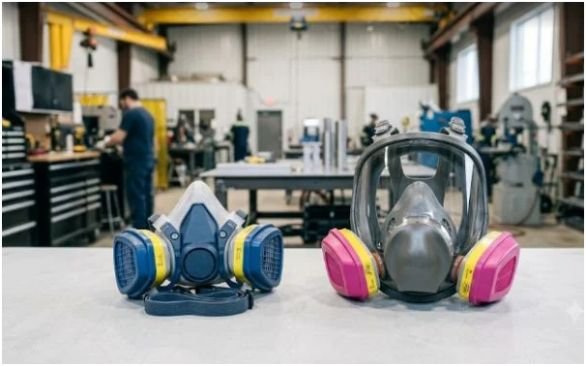
I treat APF as a workplace selection value, not a filter-efficiency percentage. An APF of 10 means expected exposure inside the respirator should be no more than one-tenth of the outside concentration. An APF of 50 reduces expected exposure to one-fiftieth.
This distinction matters because filter efficiency and workplace protection are not identical. A highly efficient filter cannot compensate for contaminated air leaking around the face seal.
Half-Mask Respirator APF 10
A reusable negative-pressure half mask seals around the nose, mouth, and chin. Its OSHA APF is 10 when properly fitted and equipped with the correct NIOSH-approved elements.
Therefore, half mask vs full face respirator protection factors favor a half mask only when exposure remains within its lower maximum use concentration.
Half masks are often lighter and less restrictive. They can be more practical during physically demanding work or in warm environments.
However, goggles, glasses, or face shields must not disturb the seal. OSHA requires other personal protective equipment to be worn without interfering with facepiece fit.
Full-Face Respirator APF 50
A negative-pressure full facepiece seals around the forehead, cheeks, and chin. OSHA assigns it an APF of 50.
NIOSH also states that the clear lens protects the eyes. Full facepieces can help protect against liquid splashes and irritating vapors when the complete respirator is correctly selected.
The larger facepiece does not create universal protection. Users still need approved filters or cartridges for the specific particulate, gas, or vapor.
A particulate filter will not automatically protect against chemical vapors. Air-purifying respirators also do not supply oxygen.
Why APF 50 Depends on the Fit-Test Method
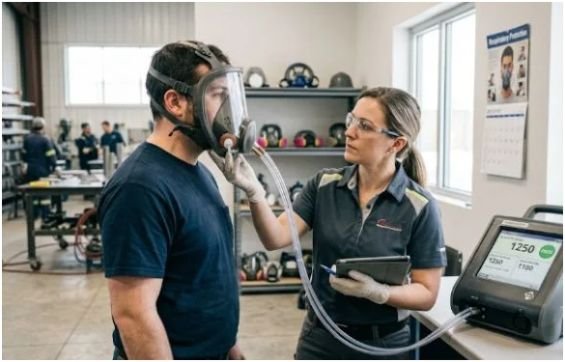
The most missed detail in half mask vs full face respirator protection factors is testing.
OSHA requires a quantitative fit factor of at least 100 for a tight-fitting half facepiece. A tight-fitting full facepiece must achieve at least 500 during quantitative testing.
A qualitative fit test may only be used for negative-pressure respirators that need a fit factor of 100 or less. A full facepiece must therefore be quantitatively fit tested when it will be used at its APF of 50.
Buying a full facepiece does not automatically give a worker five times more protection. The respirator must first prove that it fits that specific worker.
A Seal Leak Erases the Paper Advantage
Air follows the easiest route. If the seal leaks, contaminated air can bypass the filter.
OSHA requires a user seal check whenever a tight-fitting respirator is put on. This check does not replace formal fit testing, but it can identify an immediate seating problem.
The standard also prohibits facial hair that crosses the sealing surface or interferes with valve operation. That makes can you wear a respirator with facial hair a critical fit question rather than a grooming preference.
Fit testing should include the other equipment worn during work. Eyewear, hearing protection, hard hats, and face shields can shift straps or affect the seal.
Full facepieces avoid some goggle conflicts. Workers who need vision correction may require manufacturer-approved spectacle inserts instead of ordinary eyeglass arms passing through the seal.
Maximum Use Concentration: A Worked Example
This calculation turns half mask vs full face respirator protection factors into a usable decision.
OSHA defines maximum use concentration, or MUC, as the assigned protection factor multiplied by the applicable exposure limit. Suppose a substance has an OSHA permissible exposure limit of 1 part per million.
The calculated MUC would be:
Half mask: APF 10 × 1 ppm = 10 ppm
Full facepiece: APF 50 × 1 ppm = 50 ppm
At a measured workplace concentration of 18 ppm, the half mask would not provide the required protection. The full facepiece might be acceptable after a proper hazard evaluation and quantitative fit test.
However, the calculated MUC cannot exceed the contaminant’s IDLH level, the cartridge or canister limit, or another lower regulatory limit.
My practical shortcut is to calculate the MUC and then identify every other applicable limit. The lowest number controls the respirator decision, even when the APF calculation produces a higher concentration.
Eye and Face Hazards Can Settle the Choice
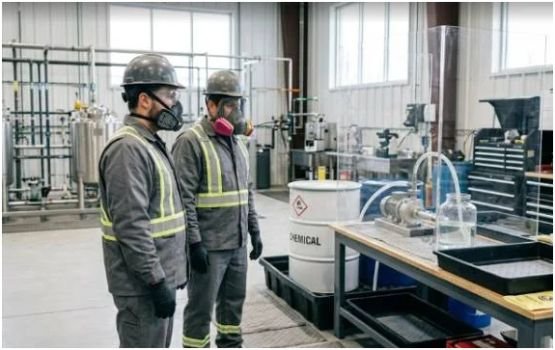
The APF numbers do not settle every half mask vs full face respirator protection factors decision.
A full facepiece is usually the stronger option when vapors irritate the eyes, airborne material threatens the eyes, or liquid splashes are possible. NIOSH identifies full-face elastomeric respirators as providing eye protection and coverage against certain splash and irritating-vapor hazards.
A half mask may remain appropriate when eye exposure is not hazardous and compatible eye protection will not affect the seal.
The hazard assessment should make this decision—not price, appearance, or the assumption that the largest mask is always the safest.
How I Choose the Right Respirator
For half mask vs full face respirator protection factors, I start with the contaminant, measured concentration, exposure limit, and physical form.
I then evaluate eye hazards, cartridge approval, service-life information, fit-test results, work rate, temperature, communication needs, and compatibility with other PPE.
A half mask often fits controlled, non-IDLH exposures within ten times the applicable exposure limit. It can be a practical option for particulates and selected gases or vapors when the correct approved elements are installed.
A full facepiece becomes stronger when the required APF exceeds 10, the eyes need protection, or separate goggles threaten the respirator seal.
The trade-offs deserve attention. Full facepieces can feel warmer, affect verbal communication, limit some areas of vision, and require regular lens inspection and cleaning.
Neither negative-pressure option is suitable for oxygen-deficient or IDLH atmospheres. OSHA requires specified atmosphere-supplying respirators for IDLH conditions.
PAPR, supplied-air respirator, and SCBA protection factors also depend on the complete system and operating mode. They cannot be determined from the half-mask or full-facepiece shape alone.
The Bigger Mask Does Not Get the Final Vote
My verdict on half mask vs full face respirator protection factors is simple: the full facepiece has the higher OSHA APF, but the hazard assessment gets the final say.
Calculate the required protection. Confirm that the cartridge matches the contaminant. Complete the correct fit test and assess possible eye exposure before work begins.
A full facepiece with a poor seal is not premium PPE. It is expensive false confidence.
Frequently Asked Questions
1. How do half mask vs full face respirator protection factors compare?
For negative-pressure APRs, OSHA assigns APF 10 to half masks and APF 50 to full facepieces, subject to correct selection, fit, and use.
2. What is the OSHA APF for a reusable half mask?
A properly fitted half-mask air-purifying respirator generally has an OSHA APF of 10.
3. Does a full face respirator always have an APF of 50?
No. APF 50 requires the correct configuration and quantitative fit testing; powered or supplied-air modes have different APFs.
4. Can a half mask protect against chemical vapors?
Yes, with the correct NIOSH-approved cartridge and use below every applicable MUC, IDLH, and cartridge limit.