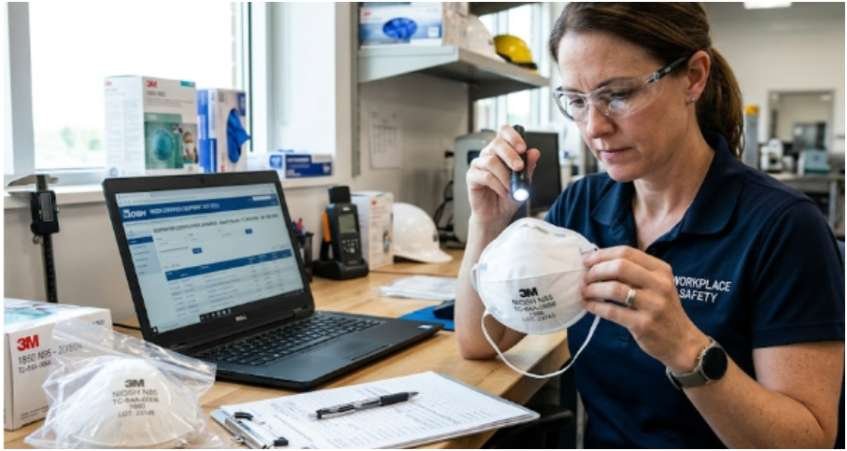
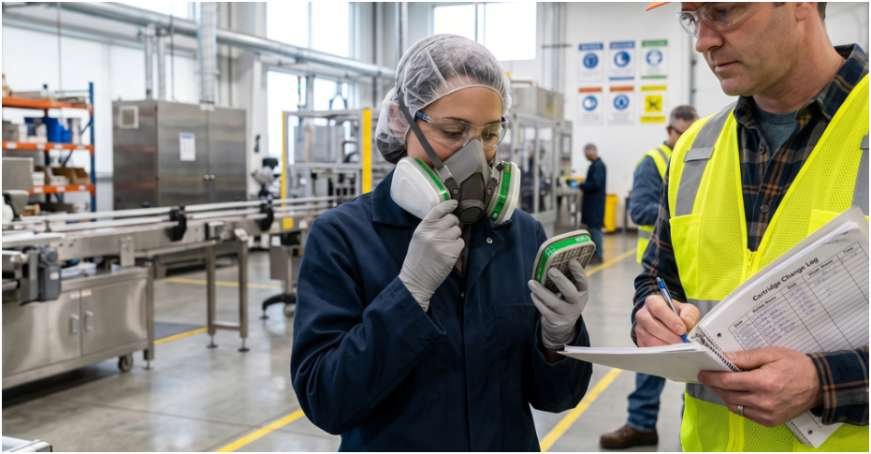
A cartridge can look clean while its protective material is nearly exhausted. That is why the answer to how often should respirator cartridges be replaced cannot come from appearance alone.
I treat replacement as a documented safety control, not a calendar guess. Some cartridges may need changing before a shift ends. Others may remain usable longer under controlled conditions. The correct interval depends on the contaminant, concentration, humidity, temperature, workload, cartridge model, and manufacturer instructions.
The Quick Answer
Gas-and-vapor cartridges must be replaced according to a written workplace change schedule or an approved end-of-service-life indicator. Replacement must occur before the cartridge reaches the end of its protective service life.
OSHA requires employers to base this schedule on objective information. Acceptable methods include manufacturer recommendations, mathematical models, exposure data, or workplace testing. A universal eight-hour or six-month interval does not satisfy every workplace.
Particulate filters follow different rules. Replace them when they become damaged, wet, dirty, contaminated, or noticeably harder to breathe through. Manufacturer time-use limits may require earlier replacement.
Respirator Cartridge Replacement Quick Reference
| Respirator element | Normal replacement trigger | Replace immediately when |
| Gas or vapor cartridge | Written change schedule or certified ESLI | Odor, taste, irritation, damage, or suspected breakthrough |
| Particulate filter | Manufacturer limit or condition-based replacement | Damaged, wet, heavily soiled, contaminated, or difficult to breathe through |
| Combination cartridge | The earliest applicable gas, vapor, or particulate limit | Either cartridge or filter section shows a replacement trigger |
| Unopened cartridge | Printed expiration or “use-by” date | Packaging is damaged or storage conditions were unsuitable |
| Opened cartridge | Workplace schedule and manufacturer instructions | Its history, exposure time, or storage condition is unknown |
Why There Is No Universal Replacement Interval
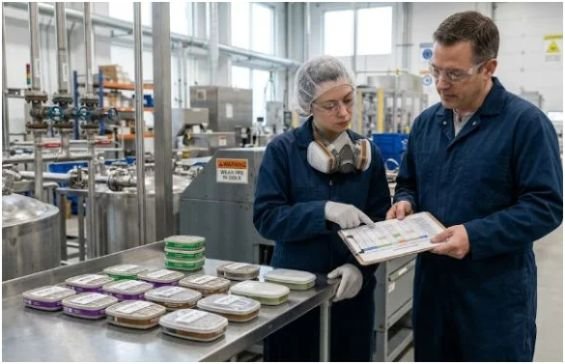
When workers ask me how often should respirator cartridges be replaced, I first ask what the cartridge removes. Chemical sorbent cartridges behave differently from mechanical particulate filters.
Gas and Vapor Cartridges
Gas-and-vapor cartridges contain materials that capture specific airborne chemicals. Their capacity decreases as contaminated air passes through them.
Service life changes with:
- Airborne chemical concentration
- Temperature and relative humidity
- Worker breathing rate
- Physical workload
- Cartridge capacity
- Length and pattern of use
- The presence of multiple contaminants
Higher concentrations usually consume cartridge capacity faster. Heavy work also pulls more air through the cartridge. OSHA therefore requires a schedule based on the actual conditions of use.
Do not treat “replace every six months after opening” as a universal OSHA rule. A manufacturer may specify storage or discard limits for a particular product. However, that limit cannot replace a workplace change schedule when cartridges protect employees from hazardous gases or vapors.
Particulate Filters
Particulate filters trap dust, mist, smoke, fumes, and other aerosols. They do not become chemically saturated in the same way as vapor cartridges.
OSHA states that replaceable filters should be changed when they are damaged, soiled, or causing increased breathing resistance. The outside should be inspected before each use.
The often-repeated eight-hour rule also needs context. R-series filters used around oily aerosols generally have an eight-hour use limit. P-series limits come from the manufacturer.
For example, 3M recommends replacing its P-series filters after 40 hours of use or 30 days, whichever comes first, when oil aerosols are present. That instruction does not automatically apply to every brand or every P100 filter.
Signs That Require Immediate Replacement
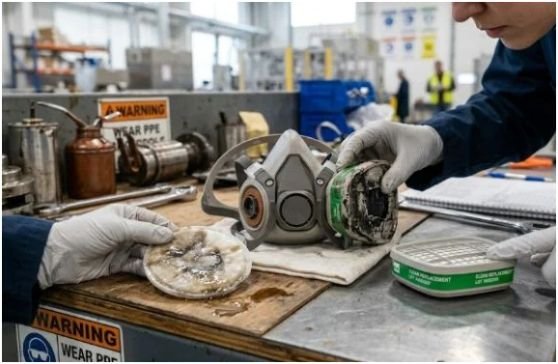
A scheduled replacement time is the normal limit. Certain warning signs require action sooner.
Leave the contaminated area and replace the cartridge or filter when:
- You smell or taste the contaminant.
- Your eyes, nose, throat, or lungs become irritated.
- Breathing resistance rises noticeably.
- The cartridge becomes cracked, wet, loose, or damaged.
- The filter becomes heavily soiled or contaminated.
- An ESLI reaches its replacement point.
- You cannot confirm the cartridge’s use history.
Odor and taste are emergency warnings, not dependable scheduling methods. Some chemicals have poor warning properties. Others can overwhelm or fatigue the sense of smell. A compliant schedule should replace the cartridge before the wearer detects breakthrough. NIOSH advises workers to consult the respirator program administrator rather than relying on sensory warning alone.
How to Create an OSHA-Compliant Change Schedule
Identify the Hazard and Exposure Level
Start with the exact chemical name and its measured airborne concentration. Review exposure monitoring, process data, and the safety data sheet.
Next, confirm that the selected cartridge is approved for that contaminant. A cartridge designed for organic vapors may not protect against ammonia, acid gases, formaldehyde, mercury vapor, or another specific hazard.
Air-purifying respirators must not be used in an immediately dangerous atmosphere or where the contaminant and concentration are unknown.
Estimate Service Life
OSHA recognizes three main ways to estimate cartridge service life:
- Conduct workplace or laboratory testing.
- Use the cartridge manufacturer’s recommendation or software.
- Use an accepted mathematical model.
Testing can offer the best result for complex mixtures. Manufacturer software is often more practical for routine operations. OSHA notes that recommendations may not account for every worker and workplace factor, so the inputs must reflect real conditions.
Tools such as 3M’s Select and Service Life Software use the contaminant, concentration, temperature, humidity, work rate, and cartridge model to estimate service life.
Apply a Safety Factor
Never schedule replacement at the predicted breakthrough time. Apply a conservative safety factor so the cartridge is removed while protective capacity remains.
OSHA recommends using a safety factor, although it does not prescribe one percentage for every situation. The chosen factor should reflect uncertainty in exposure readings, temperature, humidity, workload, and chemical mixtures.
Document and Monitor the Schedule
The written respiratory protection program should record:
- Cartridge manufacturer and model
- Hazard and measured concentration
- Service-life calculation method
- Environmental and workload assumptions
- Safety factor
- Final replacement interval
- Person responsible for implementation
Recalculate the interval when the chemical, concentration, temperature, humidity, production rate, task duration, or cartridge model changes.
Worked Change-Schedule Example
Suppose manufacturer software estimates a cartridge service life of 14 hours. The calculation uses the measured solvent concentration, expected humidity, workplace temperature, and a moderate breathing rate.
The program administrator applies a 50% safety factor as a site-specific decision. The resulting replacement limit becomes seven hours.
A worker beginning at 7:00 a.m. would receive new cartridges no later than 2:00 p.m. The workplace might instead replace them at lunch or before each shift to make compliance easier.
This example does not establish a universal seven-hour rule. It shows why how often should respirator cartridges be replaced must be converted into a clear clock time workers can follow.
Storage and Shelf-Life Rules
Keep unopened cartridges in their original sealed packaging until needed. Check the printed use-by date rather than assuming every cartridge has a three-year or five-year shelf life. Storage life varies by product and manufacturer.
Protect respirator components from contamination, sunlight, extreme temperatures, excessive moisture, chemicals, and physical damage. OSHA also requires storage that prevents deformation of the facepiece and valves.
Opened cartridges can continue adsorbing contaminants from surrounding air. Follow the manufacturer’s storage instructions, label cartridges with the opening date, and track cumulative use. Never return an undocumented cartridge to service simply because it looks clean.
Cartridge Replacement Does Not Replace Fit Testing
Fresh cartridges cannot protect a worker when contaminated air leaks around the face seal. Tight-fitting elastomeric respirators require fit testing and a user seal check each time they are worn. NIOSH confirms that reusable elastomeric respirators must form a tight seal and require fit testing.
The comparison between qualitative vs quantitative respirator fit testing can help employers choose an approved test method for the respirator type and required protection level.
Frequently Asked Questions
1. Can respirator cartridges be used for more than one shift?
Yes, but only when the written change schedule and manufacturer instructions permit reuse and the cartridges are stored correctly.
2. Should cartridges be replaced when I can smell chemicals?
Leave the area and replace them immediately, but smell must never serve as the primary replacement schedule.
3. How often should organic vapor cartridges be replaced?
Replace them at the interval calculated for the specific vapor, concentration, humidity, temperature, workload, and cartridge model.
4. Do P100 filters expire after 30 days?
Not universally; some manufacturers set a 30-day limit under specific conditions, while others provide different time-use instructions.
Don’t Let the Cartridge Call the Shots
The safest answer to how often should respirator cartridges be replaced is not “when they smell bad” or “every few months.” It is before breakthrough, according to an objective and documented schedule.
My practical next step is simple: write the cartridge model, opening date, installation time, and scheduled change time directly into a replacement log. If any exposure condition changes, stop using the old estimate and recalculate it. Guesswork has no place between a worker and a hazardous atmosphere