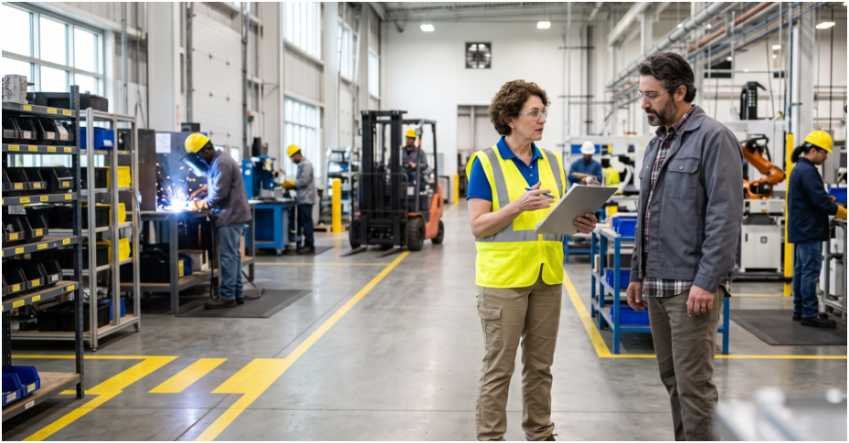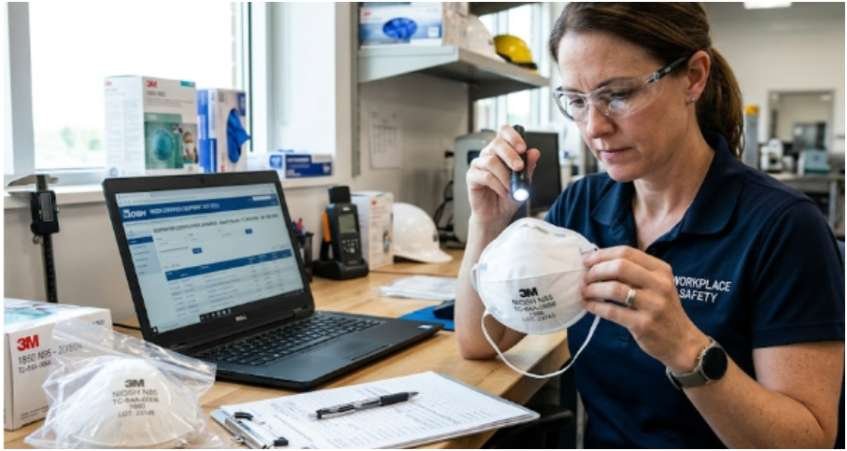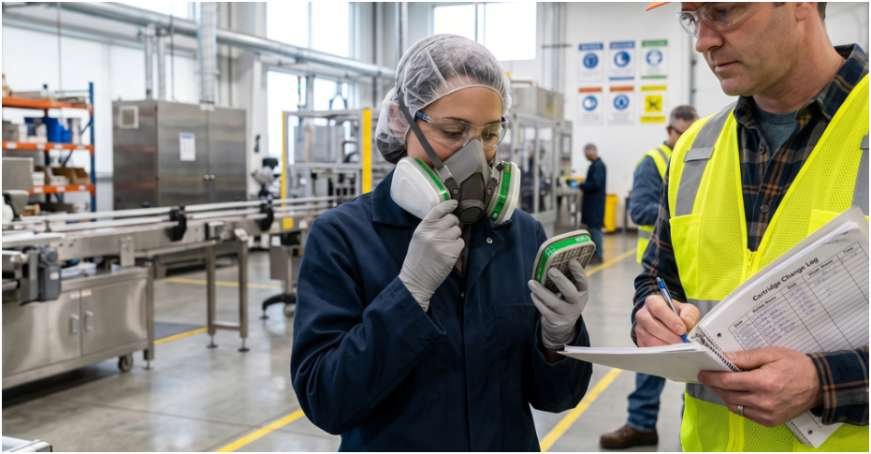
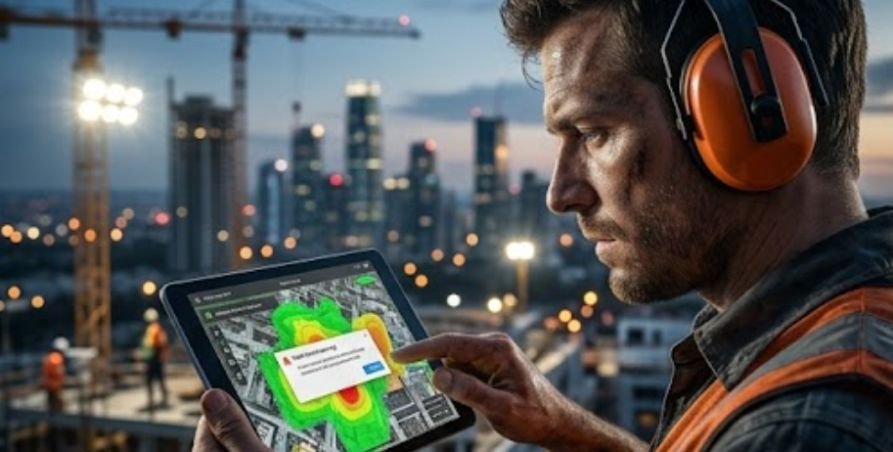
Step onto an active production floor and you will quickly realize that high volume comes with the territory. Navigating safety protocols and keeping up with osha hearing protection requirements does not have to feel like decoding a foreign language.
By understanding the rules set by the federal government, safety managers can protect employee hearing while avoiding steep OSHA compliance penalties.
Decibel Thresholds and Action Levels Matter
Keeping work environments safe starts with knowing the exact sound levels that trigger federal requirements. Understanding these decibel numbers helps managers build a solid safety strategy long before acoustic hazards damage anyone’s hearing.
OSHA’s hearing protection standard (29 CFR 1910.95) requires employers to implement a Hearing Conservation Program for workers exposed to a time-weighted average (TWA) of 85 dB(A) over 8 hours. Employers must provide protective equipment, conduct annual audiometric testing, and offer employee training to stay fully compliant.
The framework focuses on two key numbers: the Action Level and the Permissible Exposure Limit. The Action Level kicks in at 85 dB(A) TWA, requiring health monitoring and free protective gear. The Permissible Exposure Limit (PEL) sets the maximum allowed ceiling at 90 dB(A) for an 8-hour shift, making personal protective equipment and engineering controls mandatory.
Decibel Limits and Maximum Exposure Duration
As workplace sound levels rise, the amount of time a worker can remain in the area drops sharply. OSHA uses a 5 dB exchange rate to define exposure limits.
| Sound Level dB(A) | Maximum Allowed Exposure (OSHA Table G-16) | Common Workplace Example |
| 85 dB(A) | 16 Hours (Action Level Trigger) | Heavy traffic, food blender |
| 90 dB(A) | 8 Hours (Permissible Exposure Limit) | Lawnmower, shop machinery |
| 95 dB(A) | 4 Hours | Electric hand drill, router |
| 100 dB(A) | 2 Hours | Farm tractor, jackhammer |
| 105 dB(A) | 1 Hour | Chainsaw, pneumatic wrench |
| 115 dB(A) | 15 Minutes or less | Impact hammer, blast equipment |
Measuring Workplace Noise Levels Accurately
Monitoring workplace noise levels requires using calibrated tools across full operating shifts. Safety teams deploy Type 2 sound level meters and personal noise dosimeters directly on employees.
These specialized instruments integrate continuous, intermittent, and impact sound from 80 to 130 decibels. Gathering accurate data ensures you enroll the right workers into protective programs without guessing.
Noise monitoring should form part of a wider assessment of common workplace hazards and how to control them,especially when loud equipment also creates risks involving vibration, moving parts, poor visibility, electrical exposure, or restricted communication.
Building a Compliant Hearing Conservation Program

When noise exposure reaches the 85 dB(A) action level, employers must launch a formal Hearing Conservation Program. This program combines continuous health monitoring, worker education, and protective gear distribution to stop noise-induced hearing loss in its tracks.
Building this system keeps your company aligned with federal mandates while fostering a culture of health and safety. Every pillar of the program works together to preserve employee hearing over their entire career.
Mandatory Audiometric Testing Protocols
Medical checks track long-term employee hearing health and identify early signs of damage. Employers must offer baseline audiograms within six months of an employee’s initial noise exposure.
Annual audiograms are compared against baseline records to spot any Standard Threshold Shift, defined as a 10 dB change in average hearing capacity. If a shift occurs, workers must receive refitted gear and updated training.
Comprehensive Worker Training and Documentation
Informing workers on sound hazards ensures protective equipment gets used correctly every day. Annual training modules must cover the proper fit, care, and selection of personal protective gear.
Training can also cover how to inspect a safety harness when employees work in noisy elevated areas, helping them identify damaged webbing, hardware, or impact indicators before beginning the task.
Detailed documentation proves your organization’s ongoing compliance during an unexpected inspection. Keep all noise monitoring records for at least two years and maintain audiometric test files for the duration of each worker’s employment.
Choosing and Attenuating Hearing Protection Devices
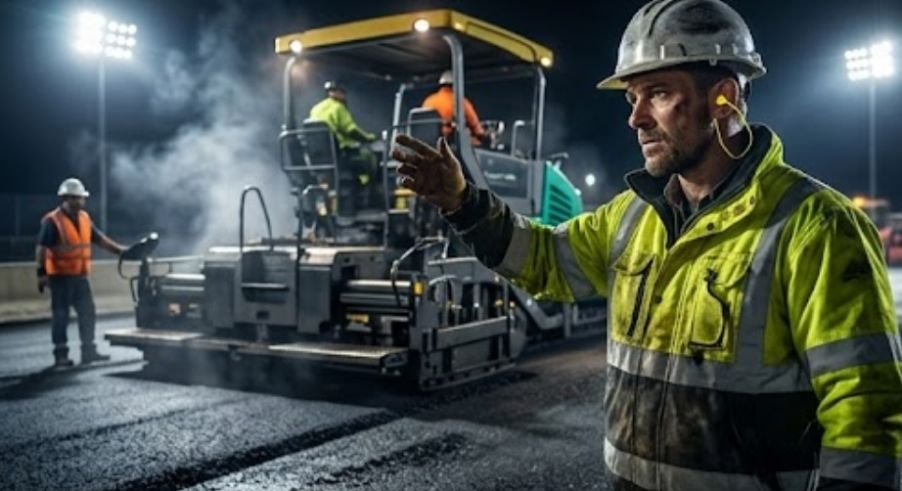
Providing high-quality protective equipment keeps workers safe when high noise levels cannot be reduced through machinery modifications alone. Employers must supply a selection of at least two distinct protector types at zero cost.
Selecting gear requires evaluating work environments, employee comfort, and the actual attenuation rating offered by each device. Proper fitting is critical to achieving real protection.
Earmuffs, Earplugs, and Dual Protection Strategies
Form factors must match the daily demands of the job site. Disposable foam plugs work great for continuous background noise, while reusable earmuffs allow quick removal during intermittent tasks.
In environments where sound levels exceed 100 dB(A), single protectors often fail to reduce noise exposure down to safe limits. Combining earplugs under earmuffs provides necessary dual protection for extremely loud setups.
Calculating Real World Protection with the NRR Formula
The Noise Reduction Rating printed on packaging overstates protection during regular workplace use. OSHA recommends applying a derating formula to determine real-world attenuation.
Subtract 7 from the listed package NRR and divide the remaining number by 2. Subtracting that result from ambient dB(A) exposure gives the estimated noise level reaching the inner ear.
Applying Controls & Managing OSHA Hearing Protection Requirements
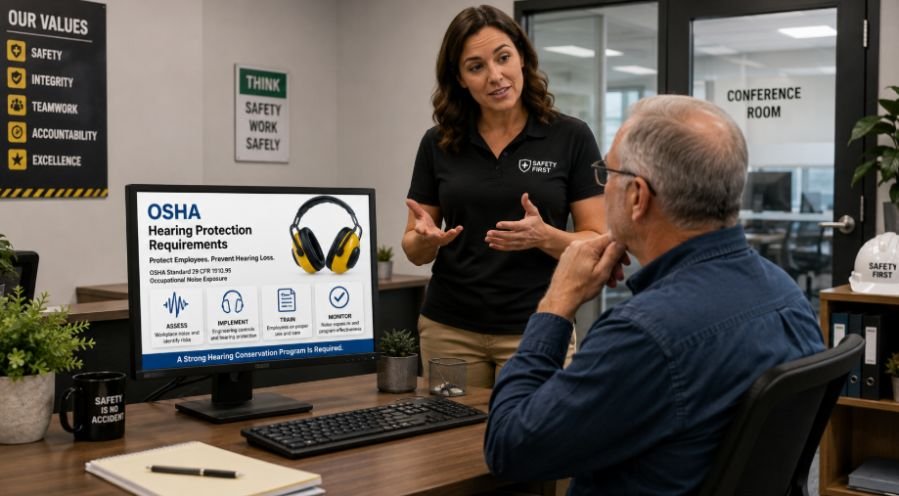
- Conduct Workplace Noise Audits
Walk the job site with a sound level meter to identify areas with occupational noise exposure exceeding 85 dB(A) TWA. Log noisy machines, set up monitoring zones, and document baseline exposure levels for every job role. - Implement Engineering Modifications
Reduce noise at the physical source before relying solely on personal protective equipment. Install acoustic baffles, lubricate loud gears, fit pneumatic exhausts with mufflers, or enclose vibrating machinery. - Adjust Administrative Work Schedules
Lower individual shift exposure times by rotating staff out of high-decibel locations. Plan loud operations during off-peak hours to reduce the total number of exposed workers across the floor. - Distribute and Fit Protective Gear
Provide workers with comfortable earplugs or earmuffs based on calculated NRR values. Perform individual fit checks and train staff on maintaining a clean acoustic seal. - Review Programs and Medical Logs
Schedule annual audiograms and refresh worker training sessions every twelve months. Update your exposure records whenever new equipment, processes, or machinery alter floor noise levels.
Frequently Asked Questions
1. Is it an OSHA violation to wear earbuds?
Wearing consumer earbuds or music headphones on a loud job site is generally an OSHA violation because they lack certified NRRs, introduce distraction hazards, and fail to satisfy official osha hearing protection requirements.
2. How many decibels is too loud in OSHA?
OSHA sets 85 dB(A) TWA as the action level where a Hearing Conservation Program must begin. Exposure hitting 90 dB(A) TWA is considered too loud for unprotected shifts and requires mandatory controls.
3. At what dB does hearing protection become required?
Employers must make hearing protectors available to employees when noise exposure reaches 85 dB(A) TWA. Wearing protective gear becomes mandatory for all employees when sound levels reach or exceed 90 dB(A) TWA.
4. What dB does OSHA require hearing protection?
OSHA mandates hearing protection for general industry workers exposed to 90 dB(A) TWA or higher. Protection is also required at 85 dB(A) for employees who have experienced a Standard Threshold Shift.
Rocking Your Compliance Strategy
Staying ahead of osha hearing protection requirements keeps your team healthy, focused, and productive every shift. By measuring noise levels, running regular health monitoring, and choosing high-performance protective gear, you turn regulatory obligations into a massive safety win. Take charge of your site’s safety culture today by evaluating your workplace noise controls and keeping your hearing conservation strategy fully up to date.