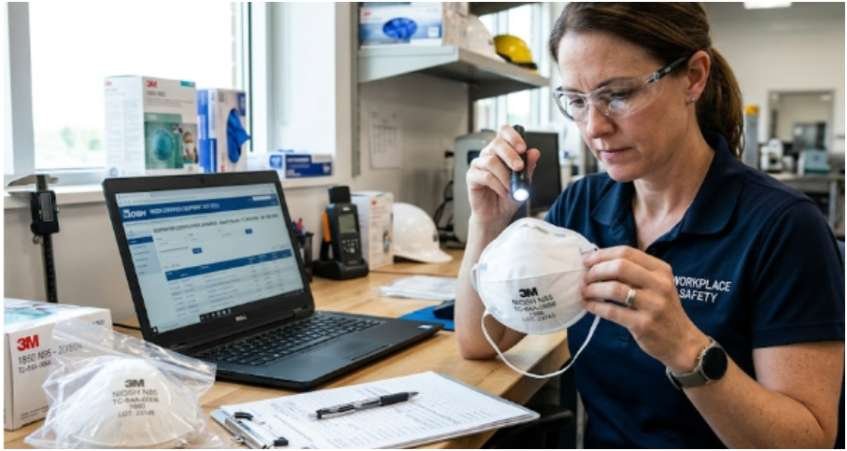
A beard can turn a highly rated respirator into poorly fitting equipment. So, can you wear a respirator with facial hair? Only when no hair enters the sealing surface or interferes with a valve. A full beard usually rules out tight-fitting N95s, elastomeric facepieces, PAPRs, and SCBA masks.
When I evaluate this question, I ignore the hairstyle’s name and trace the facepiece seal. Hair outside that boundary may be acceptable. Hair beneath it is not. This “seal-zone” approach gives a clearer answer than judging beard length alone.
Quick Answer: Beard and Respirator Compatibility
| Facial-hair condition | Tight-fitting respirator | Best action |
| Clean-shaven across the seal | Usually permitted | Complete medical clearance, training, and fit testing |
| Stubble beneath the seal | Not permitted | Shave the sealing area |
| Small mustache or soul patch inside the boundary | May be permitted | Check the valve and pass a fit test |
| Full beard or goatee crossing the seal | Not permitted | Ask about a loose-fitting PAPR |
| Hair under straps but outside the seal | May be permitted | Confirm that fit and positioning remain stable |
OSHA prohibits tight-fitting facepieces when facial hair sits between the face and sealing surface. The rule also covers hair that interferes with valve function.
Why Facial Hair Weakens a Tight Respirator Seal
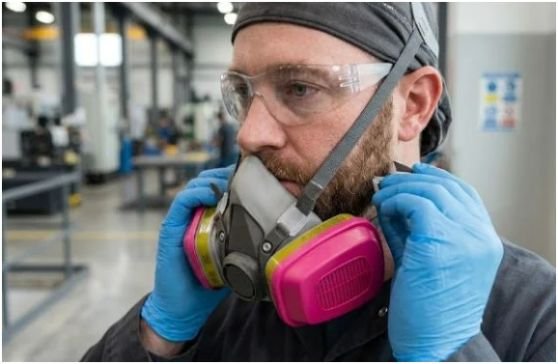
A tight-fitting respirator needs direct contact between the facepiece and skin. Beard hair creates an uneven surface. Contaminated air may leak around the edges instead of passing through the filter.
This applies to disposable N95s, reusable half masks, full-face elastomeric respirators, tight-fitting PAPRs, and tight-fitting SCBA facepieces. Positive pressure does not remove the sealing requirement from a tight-fitting design.
Does Stubble Count as Facial Hair?
Yes, when it crosses the seal. OSHA’s mandatory fit-test procedure says testing must not occur when stubble, beard growth, mustaches, or sideburns enter the sealing area. Tightening the straps does not make that condition compliant.
OSHA also states that beard fit can change daily as hair grows or shifts. A documented fit-test pass is not compliant when hair was present beneath the seal.
Can You Wear a Respirator With Facial Hair That Stays Inside the Mask?
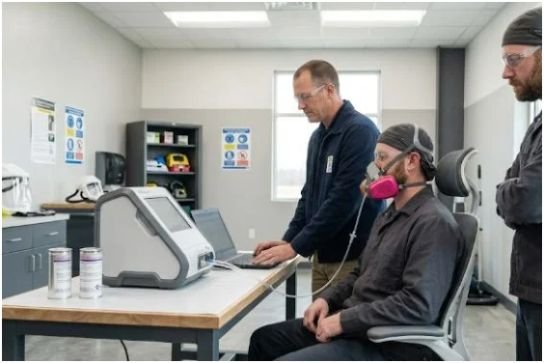
Sometimes. OSHA does not ban hair everywhere on the face. It bans hair that enters the sealing area or disrupts a valve. A compact mustache, small soul patch, or short sideburns may work with certain models.
NIOSH’s facial-hair chart shows potentially acceptable styles, including pencil and lampshade mustaches. However, every style must stay outside the seal. A style that clears one mask may touch another model’s edge or exhalation valve.
My 30-Second Seal-Zone Check
Before formal fit testing, I use this quick screening method:
- Hold the exact facepiece against your face.
- Trace every point where its edge contacts skin.
- Check the chin, jaw, cheeks, temples, and nose.
- Find any hair beneath that boundary.
- Confirm that mustache hair cannot touch a valve.
This check only identifies obvious conflicts. It cannot approve the respirator or replace fit testing. NIOSH says skin must be clean-shaven wherever a tight-fitting seal contacts the face.
Loose-Fitting PAPRs: The Main Beard-Friendly Option
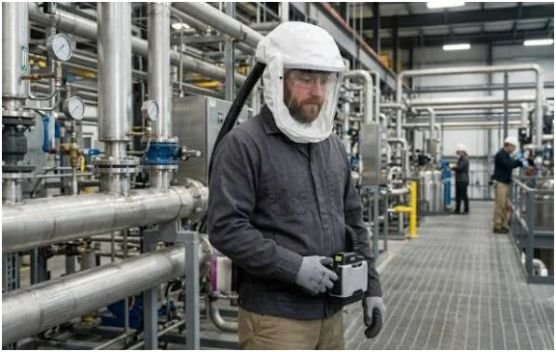
For many workers asking can you wear a respirator with facial hair, a loose-fitting powered air-purifying respirator offers the practical alternative. Its hood or helmet does not depend on a tight facial seal.
Loose-fitting PAPRs do not require fit testing and can accommodate facial hair. Tight-fitting PAPR models still require a clear sealing area and an appropriate fit test.
A PAPR uses a battery-powered blower to pull air through approved filters, cartridges, or canisters. The component must match the hazard. A particulate filter does not automatically protect against gases or vapors.
For chemical work, understand how to choose respirator cartridges for workplace chemicals before assigning the system. NIOSH states that gas and vapor cartridges must be certified for the chemical class present in the workplace.
Why a PAPR Is Not an Automatic Yes
Beard-friendly does not mean suitable for every exposure. The employer must select the correct protection level and chemical approval. The equipment must also work with hard hats, hearing protection, communication needs, and confined-space procedures.
A PAPR cannot supply oxygen. OSHA requires specific positive-pressure SCBA or supplied-air arrangements for immediately dangerous conditions. Facial hair may therefore affect job assignment when a tight-fitting emergency facepiece is essential.
How to Manage Facial Hair in a Respiratory Program
Employees should not select a mask or beard-trimming pattern without reviewing the actual workplace hazard. Follow these steps before entering a contaminated area.
1. Identify the Hazard
Evaluate the contaminant, concentration, oxygen level, exposure time, and possible emergency conditions. Respirator selection starts with the hazard, not the beard.
A respirator suitable for dust may offer no protection against solvent vapor. The employer’s written respiratory-protection program should determine the required respirator class.
2. Confirm the Facepiece Type
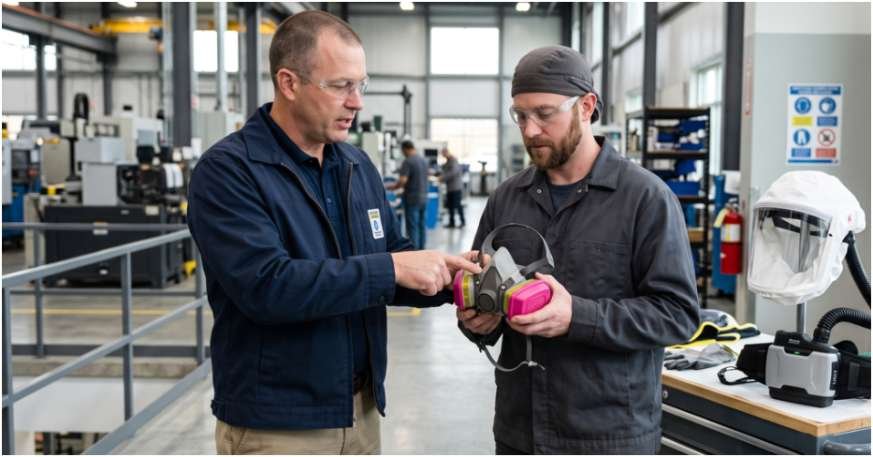
N95s and most reusable half-mask or full-face respirators are tight-fitting. Some PAPRs are also tight-fitting.
Only a loose-fitting hood, helmet, or facepiece removes the facial-seal requirement. Check the equipment instructions rather than assuming every powered respirator is beard compatible.
3. Keep Hair Outside the Seal
Shave or trim the exact contact area. Do not use petroleum jelly, excess strap tension, tape, or a beard cover to compensate for hair beneath the seal.
Hair beneath the straps may be acceptable when it does not reach the sealing surface. The respirator must remain stable while the wearer talks, bends, and moves their head.
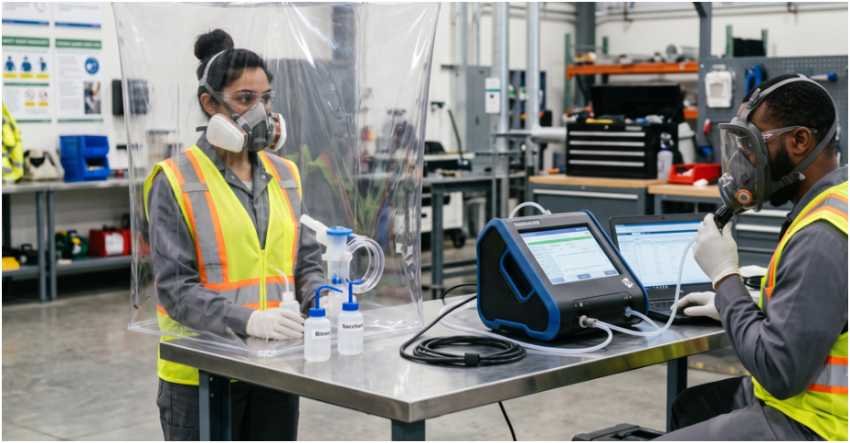
4. Complete Fit Testing
OSHA requires fit testing before workplace use and at least annually for tight-fitting respirators. Retesting is needed after changing the model, style, brand, or size.
Facial changes, major weight changes, dental work, or scarring may also require another test.
Passing a test with one N95 does not approve every N95. Each brand, design, and size can sit differently on the face.
5. Check the Seal Every Time
A fit test verifies the selected respirator model under controlled conditions. A user seal check confirms correct positioning on the day of use.
It cannot replace a formal fit test. It also cannot make facial hair beneath the seal acceptable. OSHA requires the check each time a tight-fitting respirator is put on.
Mistakes That Reduce Respirator Protection
Do not treat filtration efficiency as the whole story. A high-performing filter cannot stop contaminated air that leaks around the facepiece.
Do not assume one successful fit test creates a permanent exemption. Hair growth, weight changes, dental work, scarring, or a different facepiece may alter the seal. Workers should report these changes before entering the exposure area.
Also, do not assume every PAPR works with a beard. Tight-fitting PAPR facepieces still need clean sealing skin and fit testing. Only loose-fitting versions remove the face-seal requirement.
Frequently Asked Questions
1. Can you wear an N95 with a beard?
Not when beard hair or stubble crosses the N95 sealing surface; a loose-fitting PAPR may be an alternative.
2. Can you pass a respirator fit test with facial hair?
Only when all hair stays outside the sealing surface and does not interfere with any valve.
3. Can you wear a respirator with facial hair for voluntary use?
Facial hair can still cause leakage during voluntary use, even when the complete OSHA workplace program does not apply.
4. Which respirator works with a full beard?
A properly selected loose-fitting PAPR or hooded system may work when it meets the hazard and required protection level.
Shave the Seal—or Change the System
So, can you wear a respirator with facial hair? Yes, but hair must avoid every part of a tight-fitting seal and its valves. For a full beard, a properly selected loose-fitting PAPR is usually the practical route.
My rule is blunt: do not negotiate with the seal line. Shave the contact area, or use an approved loose-fitting system suited to the hazard. Show your exact facial-hair pattern and job exposure to the respiratory-program administrator before entering the work area.