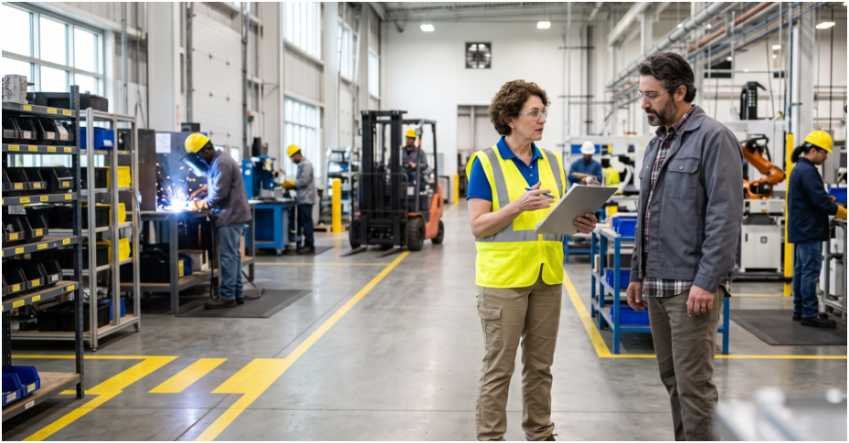

I believe a safer workday begins before the first task starts. A quick visual inspection can reveal spills, damaged equipment, blocked exits, missing protective gear, and other problems that may otherwise cause an injury. Following a daily workplace safety checklist for employees creates a consistent routine for recognizing these risks before work gets busy.
A daily check should be simple enough to complete within five minutes but detailed enough to identify meaningful hazards. It does not replace formal inspections, equipment maintenance, risk assessments, or workplace training. Instead, it gives workers a practical way to confirm that their surroundings, equipment, and personal protective measures are ready for the shift.
Why Daily Safety Checks Matter
Workplace conditions can change overnight or even between shifts. A delivery may block an emergency route, a cable may be left across a walkway, a machine guard may become loose, or a chemical container may be stored incorrectly.
Employees often notice these changes first because they work directly with the equipment and processes involved. A daily inspection encourages workers to report concerns early instead of waiting until a hazard causes an incident.
Regular checks can also improve communication between employees, supervisors, maintenance teams, and safety representatives. When hazards are recorded and assigned to responsible people, safety becomes an active process rather than paperwork completed after an accident.
Five-Minute Pre-Shift Safety Check

Confirm Personal Readiness
Before beginning work, employees should confirm that they understand their assigned tasks and have received the necessary instruction or authorization. A worker should never operate unfamiliar equipment or perform a high-risk task without appropriate training.
Employees should also consider whether fatigue, illness, heat exposure, distraction, or reduced alertness could affect safe performance. Any condition that may create an immediate risk should be discussed with the appropriate supervisor before work begins.
Inspect Personal Protective Equipment
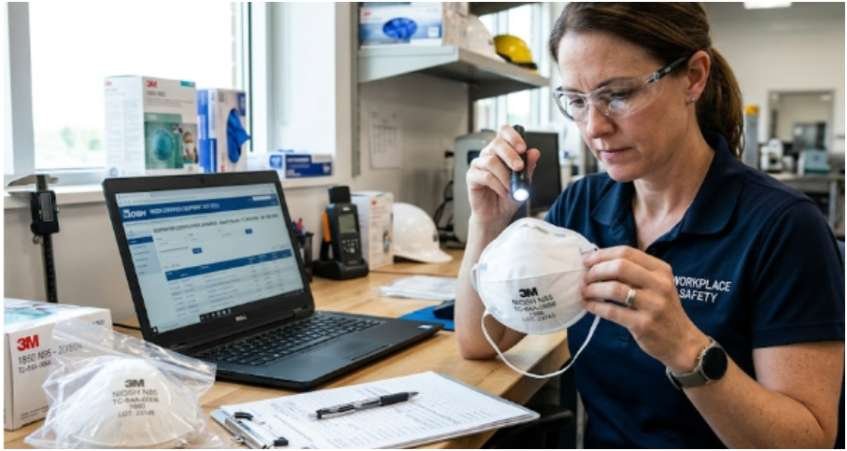
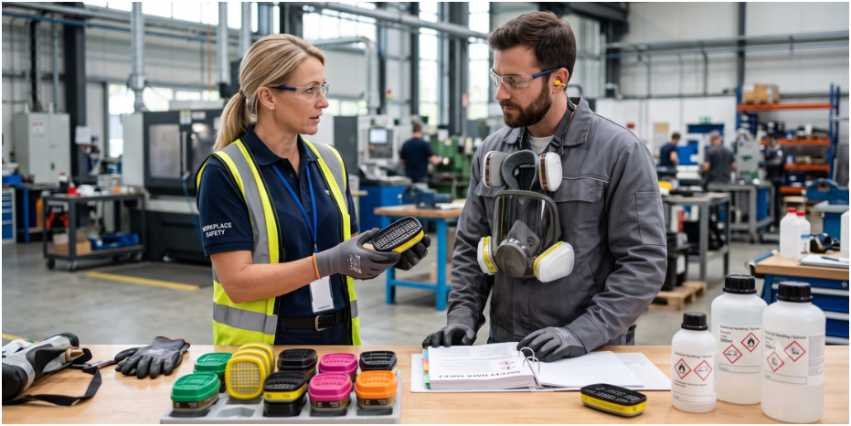
Required personal protective equipment should be available, suitable for the hazard, correctly fitted, and free from visible damage. Depending on the task, this may include safety glasses, gloves, hearing protection, protective footwear, helmets, face protection, or respiratory equipment.
Workers should check for cracks, worn straps, contamination, damaged lenses, poor seals, or expired components. Defective protective equipment should be removed from service and replaced rather than temporarily repaired without approval.
Check Floors, Walkways, and Housekeeping
Floors and walking surfaces should be clean, stable, and reasonably dry. Employees should look for spills, loose materials, damaged flooring, trailing cords, open drawers, uneven mats, or objects projecting into walkways.
Waste, packaging, tools, and unused materials should be stored in designated areas. Good housekeeping improves visibility, reduces fire loads, and prevents common slip, trip, and fall incidents.
Examine Tools and Equipment
Before use, employees should inspect tools and machinery for damage, unusual wear, missing guards, leaks, loose components, or exposed moving parts. Safety devices and emergency stops should be present and accessible.
A damaged tool should be clearly identified and removed from use. Workers should not operate machinery when a required guard has been removed or bypass a safety device to complete work faster.
Equipment-specific pre-use inspections may be more detailed than the general daily check. Forklifts, ladders, lifting devices, vehicles, powered tools, and specialized machinery should follow their approved inspection procedures.
Review Electrical Safety
Power cords, plugs, outlets, extension leads, and electrical panels should be visually checked for damage. Frayed insulation, exposed wires, scorch marks, loose plugs, overloaded outlets, and unapproved temporary wiring require attention.
Electrical panels and disconnects should remain accessible. Employees should not attempt electrical repairs unless they are trained, authorized, and following the required safe-work procedure.
Verify Fire and Emergency Readiness
Emergency exits, evacuation routes, stairways, and access doors should remain unobstructed. Exit signs and emergency lighting should be visible, while fire extinguishers should be accessible and show no obvious signs of damage or tampering.
Employees should know how to raise an alarm, where to assemble, and who to contact during an emergency. First-aid supplies, eyewash equipment, spill kits, and emergency communication devices should be available wherever the workplace risk assessment requires them.
Review Chemical Storage and Labels
Chemical containers should be closed, correctly labeled, and stored in designated locations. Employees should never use an unidentified substance or transfer chemicals into unmarked containers.
Safety data sheets and handling instructions should be accessible. Spills, damaged containers, unusual odors, ventilation problems, or signs of chemical exposure should be reported immediately.
Consider Ergonomics and Manual Handling
Workers should arrange frequently used materials within comfortable reach and adjust chairs, screens, workstations, or tools when possible. Repetitive movements, awkward postures, forceful exertion, and prolonged standing can create cumulative strain.
Before lifting or moving an object, employees should evaluate its weight, shape, stability, destination, and travel path. Mechanical assistance or team lifting should be used when the load cannot be handled safely by one person.
What to Do When a Hazard Is Found
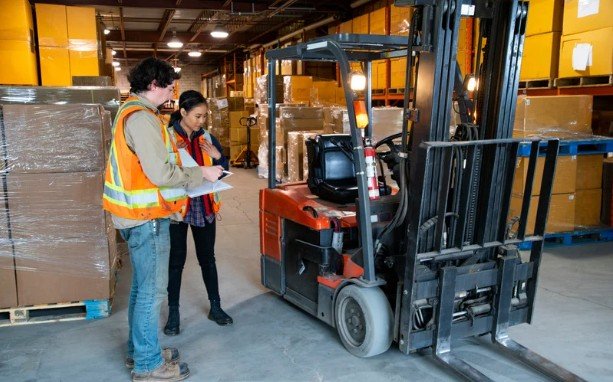
Finding a hazard is only useful when it leads to action. Employees should stop or avoid the affected task when there is an immediate risk. The area should be isolated or controlled when this can be done safely, and the designated supervisor or safety representative should be informed.
The report should identify the hazard, its exact location, the time it was found, and any temporary control applied. Photos may help when permitted. A responsible person should then be assigned to correct the problem, with a target completion time based on the level of risk.
Work should not restart after a serious hazard until an authorized person can conduct a workplace safety inspection and confirm that appropriate controls are in place.
Employee Check Versus Formal Inspection
A pre-shift check focuses on visible conditions that may affect an employee’s immediate work. A supervisor inspection reviews wider operational controls, while a formal safety audit examines policies, training records, maintenance systems, legal requirements, and long-term performance.
These activities support one another but are not interchangeable. A completed checklist should never be treated as proof that every possible hazard or compliance obligation has been addressed.
Frequently Asked Questions
1. What should employees inspect before starting work?
Employees should examine their PPE, work area, walkways, tools, machinery, electrical equipment, emergency routes, chemical storage, and any conditions unique to the day’s assignment.
2. How often should a workplace safety check be completed?
A brief check should normally be completed before the shift or before beginning a new task. Higher-risk equipment may require a separate inspection before every use.
3. Is a daily checklist enough to prevent accidents?
No checklist can identify every risk. It should be supported by training, maintenance, worker consultation, hazard assessments, incident reviews, supervision, and effective corrective actions.
4. Who should complete a daily workplace safety checklist for employees?
Each worker can review the area and equipment they use, while supervisors should confirm that reported problems are assessed, assigned, corrected, and documented.
A Safer Start to Every Shift
I see the greatest value of a daily check in the habit it creates. It encourages me to pause, observe the workplace, and address small warning signs before they become serious problems.
A strong daily workplace safety checklist for employees should remain quick, relevant, and easy to report from. When employees are confident that concerns will be taken seriously and corrected promptly, the checklist becomes more than a form—it becomes part of how the workplace operates safely every day.