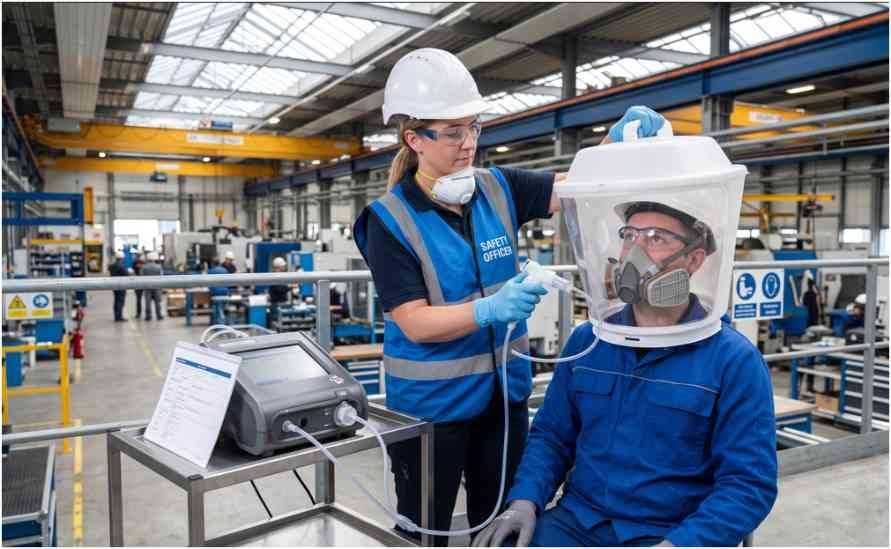
A respirator can be approved yet still fail if air leaks around the face seal. That is why OSHA respirator fit testing requirements for employees focus on the worker, the exact facepiece, and actual wearing conditions. I use three gates: medical clearance, a passed test on the assigned respirator, and a successful seal check before each use.
Under 29 CFR 1910.134, employers must fit test workers required to use tight-fitting respirators. Testing must occur before initial use, after specified changes, and at least annually. Loose-fitting hoods and helmets do not need fit testing because they do not depend on a face seal.
Who Must Receive an OSHA Respirator Fit Test?
OSHA respirator fit testing requirements for employees cover required use of negative- or positive-pressure respirators with tight-fitting facepieces.
The employee must pass with the same make, model, style, and size used at work. Passing with one respirator does not qualify the worker to use another model.
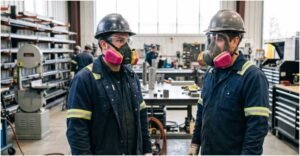
Required-use N95 filtering facepieces need fit testing because they depend on a tight facial seal. The rule also covers elastomeric half masks, full-facepieces, tight-fitting PAPRs, supplied-air respirators, and SCBAs with tight-fitting facepieces.
OSHA Fit Testing Requirements at a Glance
| Compliance point | Employer requirement |
| Medical evaluation | Complete before testing or required use |
| Initial test | Complete before first tight-fitting use |
| Annual test | Repeat at least every 12 months |
| Respirator change | Retest for another make, model, style, or size |
| Physical change | Retest when facial fit may change |
| Test method | Use an OSHA-accepted QLFT or QNFT |
| Daily use | Require a seal check at every donning |
| Records | Retain until the next test |
These OSHA respirator fit testing requirements for employees form the minimum federal baseline.
Medical Clearance Comes Before Fit Testing
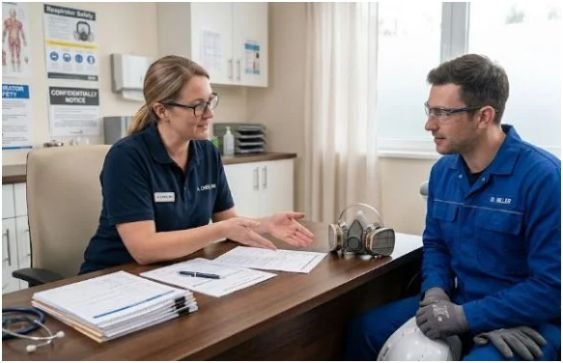
Medical evaluation is the first compliance gate. A physician or other licensed healthcare professional must evaluate the employee before fit testing or required respirator use. The questionnaire or equivalent examination must remain confidential.
The employer receives a written recommendation about the worker’s ability to use a respirator. The employer should not receive confidential medical details.
Medical clearance is not automatically annual. Reevaluation is required when symptoms, professional concerns, program findings, or heavier work conditions justify it.
When Initial, Annual, and Triggered Retesting Apply
OSHA respirator fit testing requirements for employees establish three timing rules: test before initial use, repeat at least annually, and retest sooner after a relevant respirator or physical change.
The Exact-Facepiece Rule
Changing the facepiece make, model, style, or size requires retesting. Employers should record the full product identity instead of writing only “N95” or “half-mask respirator.”
Replacing only a filter or cartridge does not automatically trigger another fit test when the approved facepiece remains unchanged.
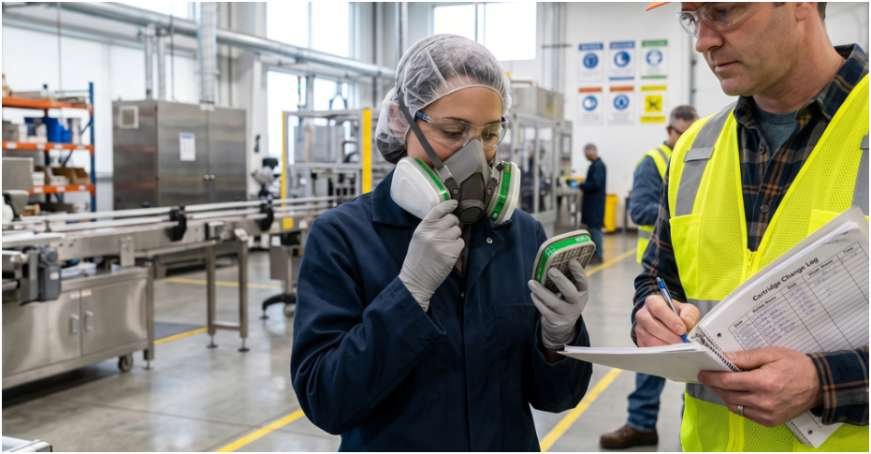
Cartridge service life instead depends on the hazard, exposure, manufacturer data, and employer change schedule. Employees using chemical cartridges should also understand how often respirator cartridges should be replaced.
Physical Changes That Trigger Another Test
Facial scarring, major dental work, cosmetic surgery, or obvious weight change may alter the seal. An employee reporting an unacceptable fit must also receive an opportunity to select another facepiece and retest.
Employers should not wait for the next annual date when a visible or reported change could affect fit. Triggered testing must occur before the worker continues required respirator use.
Qualitative vs Quantitative Respirator Fit Testing
OSHA respirator fit testing requirements for employees permit qualitative and quantitative testing, but each method has limits. Employers must follow an OSHA-accepted Appendix A protocol.
When Qualitative Fit Testing Is Allowed
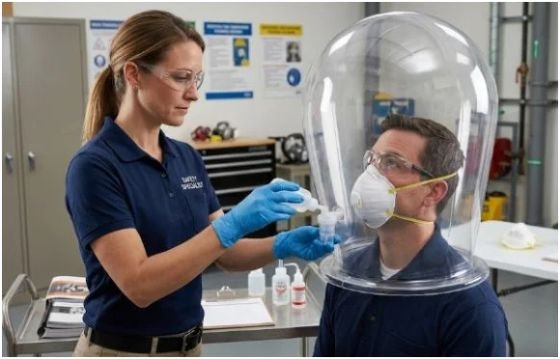
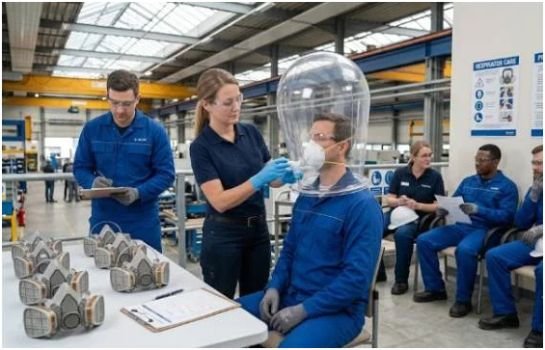
A qualitative fit test is a pass-or-fail method using an accepted challenge agent. The worker indicates whether the agent can be tasted, smelled, or otherwise detected inside the respirator.
OSHA-approved protocols include saccharin, Bitrex, isoamyl acetate, and irritant smoke.
QLFT may test negative-pressure air-purifying respirators that need a fit factor of 100 or less. It commonly applies to required-use N95s and half-mask respirators.
When Quantitative Fit Testing Is Required
A quantitative fit test uses an instrument to calculate leakage around the facepiece. It produces a numerical fit factor rather than relying on the worker’s senses.
The minimum passing fit factor is:
- 100 for a tight-fitting half facepiece.
- 500 for a tight-fitting full facepiece.
A negative-pressure full-facepiece used at its higher protection level requires QNFT.
One common mistake is overlooking that OSHA allows either QLFT or QNFT for tight-fitting PAPRs and atmosphere-supplying respirators when testing occurs in negative-pressure mode.
Facial Hair and Other Seal Interference
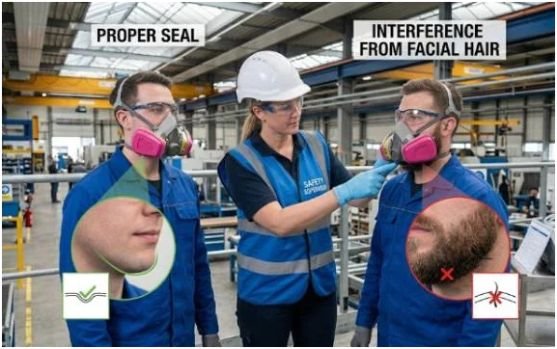
OSHA respirator fit testing requirements for employees prohibit tight-fitting use when facial hair crosses the sealing surface or interferes with valves.
The rule addresses seal interference, not facial hair elsewhere on the face. A moustache may be acceptable when it remains fully inside the seal. Even short stubble may be unacceptable when it lies beneath the sealing surface.
Glasses, goggles, head coverings, and other PPE must not disturb the facepiece. Equipment that could affect fit should be worn during testing.
Workers who cannot achieve a seal may need another facepiece or an appropriate loose-fitting respirator.
What Happens During an OSHA-Compliant Fit Test?
Appendix A requires employers to offer enough models and sizes to obtain an acceptable fit. The employee must be allowed to choose a facepiece that feels suitable and fits correctly.
The employee receives donning guidance, checks comfort, wears the respirator for at least five minutes, and completes the required exercises. These commonly include:
- Normal and deep breathing.
- Turning and moving the head.
- Speaking aloud.
- Bending or moving in place.
The precise exercises depend on the OSHA-approved testing protocol.
A Fit Test Does Not Replace a Daily Seal Check
Passing OSHA respirator fit testing requirements for employees does not remove the daily seal-check duty.
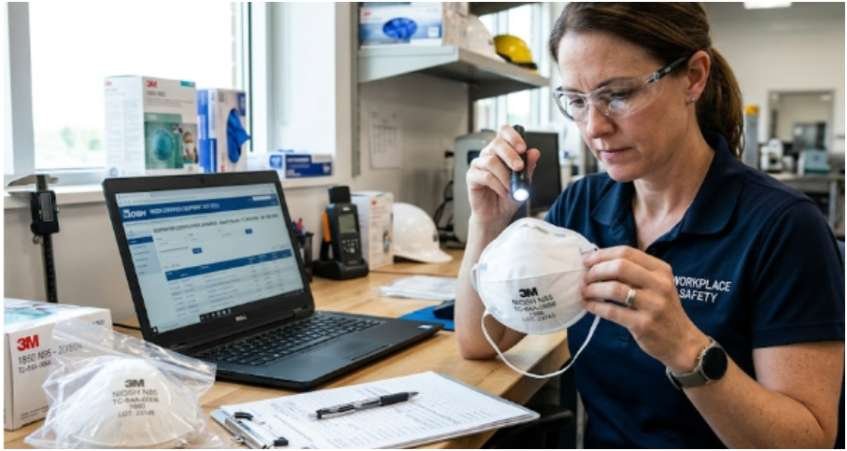
Every tight-fitting respirator user must perform a seal check each time the respirator is put on. OSHA permits the procedures in Appendix B-1 or an equally effective manufacturer method.
A fit test determines whether a specific respirator can fit the worker. A user seal check confirms that the respirator is positioned correctly during that particular donning.
Neither procedure replaces the other.
Mandatory Respirator Fit-Test Records
OSHA respirator fit testing requirements for employees also include detailed documentation. Employers must record:
- The employee’s name or unique identifier.
- The type of fit test performed.
- The respirator make, model, style, and size.
- The testing date.
- The test result.
QLFT records show pass or fail. QNFT records include the numerical fit factor and the test recording. Employers must retain the current record until the next fit test occurs.
Records belong within the written respiratory protection program. Required respirators, training, and medical evaluations must be free to employees.
Federal OSHA establishes the baseline. An OSHA-approved State Plan may introduce different or more stringent provisions.
My Three-Gate Compliance Check
I assess OSHA respirator fit testing requirements for employees with three questions:
- Is the worker medically cleared for the respirator and work conditions?
- Did the worker pass on the exact facepiece now assigned?
- Can the worker achieve a seal today without hair, PPE, damage, or poor positioning?
A “no” at any gate means the employee should not enter the hazardous area in that tight-fitting respirator.
This method catches a common gap: a worker may have a current annual certificate but still wear the wrong model. A valid date alone does not prove compliance.
Frequently Asked Questions
These FAQs clarify the scope of OSHA respirator fit testing requirements for employees.
1. Does OSHA require annual respirator fit testing?
Yes. Required users of tight-fitting respirators need testing before initial use and at least once every 12 months.
2. Do employees wearing N95 respirators need fit testing?
Yes, when the employer requires the N95 to control a workplace respiratory hazard.
3. Can an employee pass a fit test with a beard?
Not when the beard or stubble crosses the sealing surface or interferes with valve function.
4. Do loose-fitting PAPRs require fit testing?
No. Loose-fitting hoods and helmets do not depend on a face-to-facepiece seal.
Seal the Program, Not Just the Mask
OSHA respirator fit testing requirements for employees are not an annual paperwork ritual. They connect medical fitness, exact respirator selection, facial conditions, daily checks, training, and records.
I would audit three items today: expired test dates, vague facepiece descriptions, and workers whose facial condition or PPE has changed. Fix those gaps before the next hazardous task—not after a preventable exposure.