
Navigating safety regulations on a busy job site can feel overwhelming, but keeping your crew safe is surprisingly straightforward when you have the right baseline system. Personal protective equipment serves as your vital last line of defense against unexpected site hazards, making strict compliance essential for every contractor. Mastering federal rules keeps your team healthy while helping you dodge heavy regulatory fines.
Understanding mandatory ppe requirements for construction sites gives project managers total control over site safety. This complete breakdown covers every mandatory standard, updated fit rule, and step-by-step strategy you need to run a safe, fully compliant project.
Core Baseline Protection Standards Every Site Needs
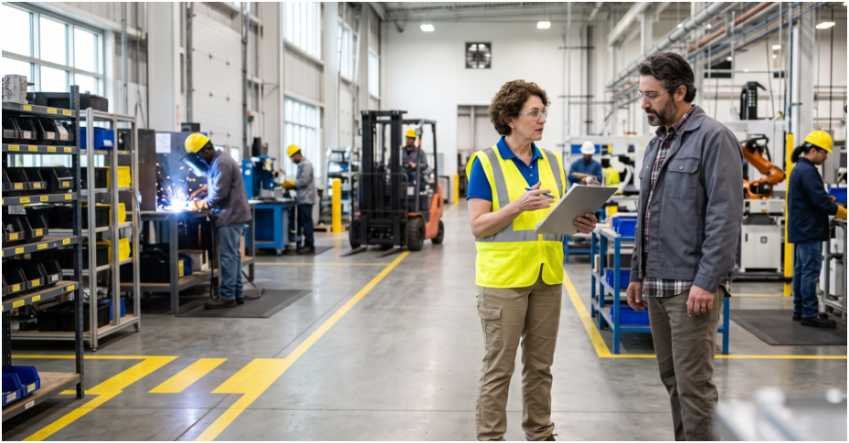
OSHA requires construction employers to provide and ensure the use of properly fitting, industry-approved PPE. Standard job site requirements include hard hats, ANSI-rated safety glasses, sturdy work boots, heavy-duty gloves, high-visibility vests, and appropriate clothing (long pants and sleeved shirts).
Task-specific gear like respirators and fall harnesses may also be needed depending on the site JHA.
Standard Head and Face Protection Rules
Every active site demands reliable impact protection against falling objects and flying debris. Hard hats must conform strictly to ANSI Z89.1 standards to absorb heavy structural impacts effectively.
Class G helmets protect against general low-voltage hazards, Class E handles high-voltage work, and Class C offers lightweight comfort where electrical hazards are absent. Complementing your head gear, safety glasses featuring side shields meeting ANSI Z87.1 are mandatory whenever cutting or drilling threatens your vision.
Essential Hand Foot and Apparel Standards
Extremity protection requires selecting specialized materials tailored to specific daily job hazards.
Work gloves must match the task, utilizing cut-resistant materials for steel framing or chemical-resistant rubber for concrete handling. Footwear must meet ASTM F2413 standards to shield against crushing weights or puncture hazards from rogue nails. Basic site apparel mandates full-length pants and sleeved shirts to prevent skin lacerations, explicitly banning shorts, tank tops, or open-toed shoes.
Task-matched gloves, supportive footwear, and correctly fitted clothing can also help reduce manual handling injuries at work by improving grip, stability, and control when employees lift, carry, push, or reposition construction materials.
High-Visibility Garments and Fall Systems
Standing out against chaotic site backgrounds dramatically reduces struck-by machinery incidents.
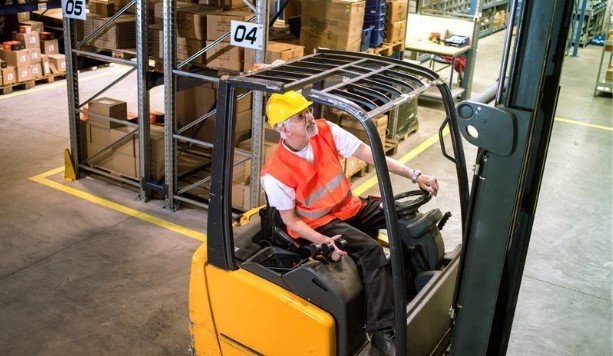
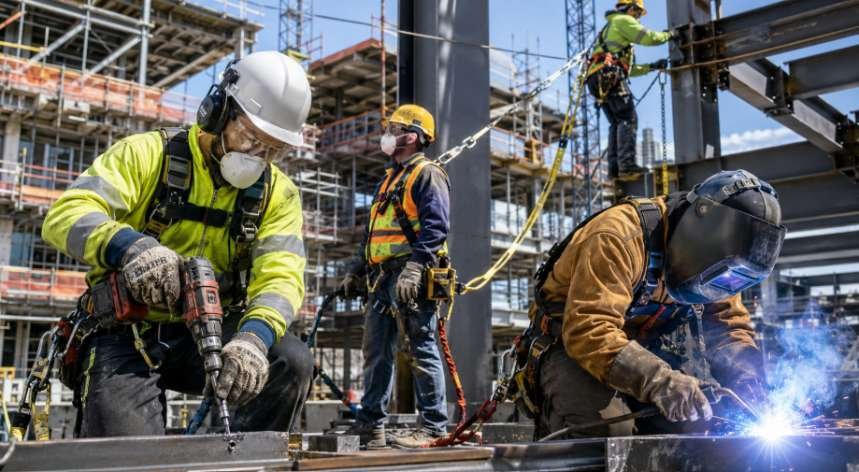
High-visibility vests or shirts compliant with ANSI 107 are mandatory, especially around mobile equipment and active traffic. When crew members work at elevated heights of six feet or more, personal fall arrest systems become non-negotiable. These specialized systems require full-body harnesses, shock-absorbing lanyards, and secure anchor connectors rated for heavy impact forces.
Understanding OSHA Regulatory Standards and Fit Rules

The Occupational Safety and Health Administration (OSHA) sets the foundational rules for Personal Protective Equipment (PPE) to minimize employee exposure to hazards. Under standard 29 CFR § 1926.95, employers must provide PPE that properly fits each individual worker to prevent injuries caused by ill-fitting gear.
Mandatory Fit Clarifications and Sizing Requirements
Ill-fitting equipment creates severe hazards by slipping out of place during critical moments.
OSHA clarified standard 1926.95(c) to explicitly demand that all distributed gear fits each employee correctly. Oversized gloves can catch in rotating machinery, while loose hard hats alter line-of-sight during overhead lifts. Employers must offer multiple equipment sizes and gender-specific designs so every worker receives comfortable, fully protective gear.
Employer Payment Duties and Equipment Exceptions
Federal rules make financial obligations clear regarding who funds required site safety equipment.
Under 29 CFR 1926.95(d), employers must furnish almost all required safety gear completely free of charge to workers. This rule covers hard hats, face shields, high-visibility vests, welding shields, and specialized respirators. Narrow exceptions exist for standard non-specialty safety-toe footwear and prescription safety eyewear, provided employees can freely wear those items off the job site.
Documented Assessments and Safety Training Programs
Distributing gear without proper instruction leaves your job site vulnerable to serious compliance citations.
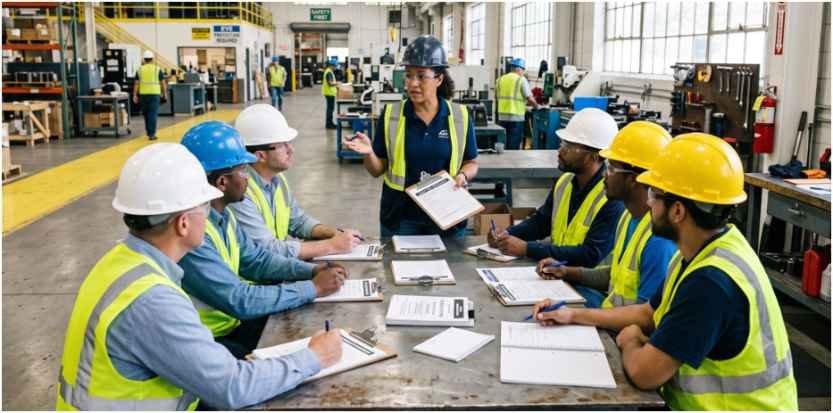
Contractors must conduct a written Job Hazard Analysis (JHA) before starting work to identify exact gear requirements. Workers require hands-on training covering proper donning techniques, adjustment methods, operational limits, and sanitation practices. Maintaining clean training records proves your proactive commitment to safety during unexpected OSHA site inspections.
Advanced Protection Gear for Specialized Construction Trades
Certain high-risk job tasks expose workers to health hazards that standard clothing and hard hats simply cannot mitigate. Specialized gear shields your workforce against long-term toxic exposures and hazardous environmental conditions.
Respiratory Protection and Noise Defense
Invisible atmospheric hazards require specialized respiratory systems to protect long-term lung health.
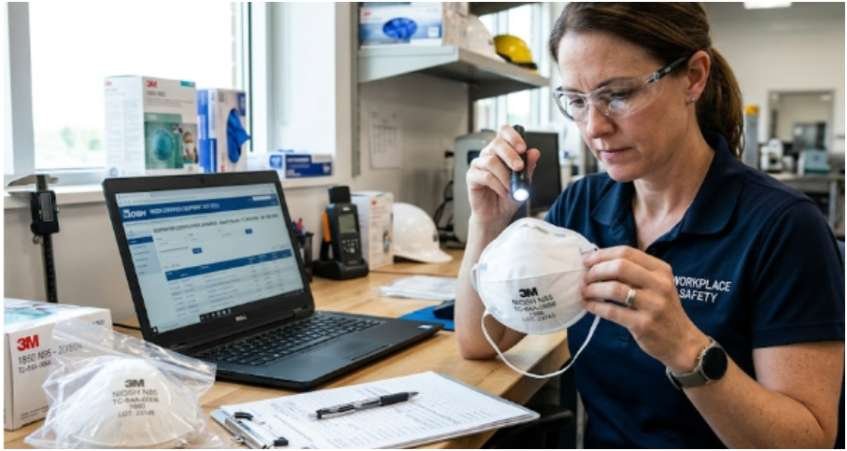
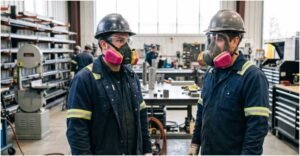
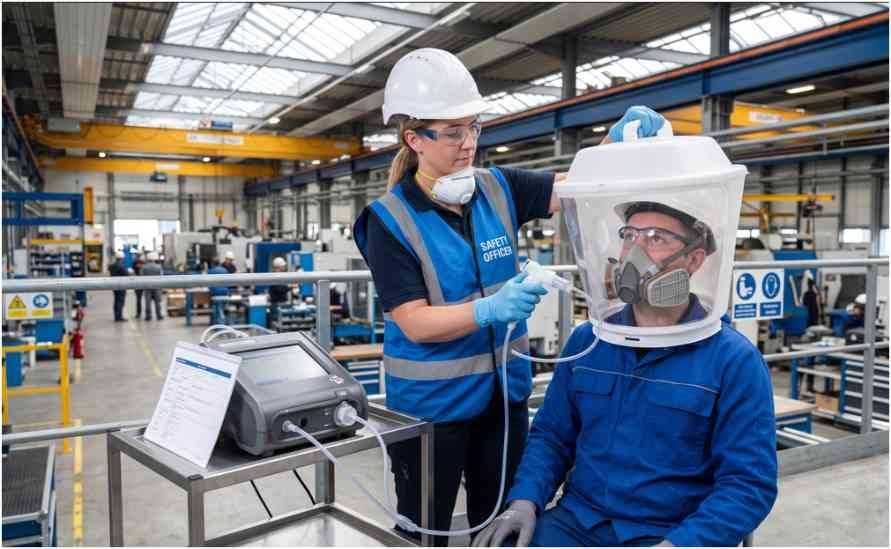
When cutting masonry, demolishing concrete, or spraying coatings, respirators governed by 29 CFR 1910.134 become mandatory. NIOSH-approved N95s or half-mask respirators require proper fit testing and medical evaluations prior to site deployment. For high-noise zones exceeding permissible decibel limits, earplugs or muffs prevent permanent noise-induced hearing loss.
Workers assigned respirators should also be trained on how to fit a respirator correctly, since improper strap placement, facial hair, or skipped seal checks can allow hazardous dust and vapors to bypass the filter.
Task-Specific Safety Gear
Specialized trade work requires customized equipment combinations engineered for unique operational risks.
Electricians require arc-flash face shields alongside rubber insulating gloves rated under 29 CFR 1926.97 for high-voltage protection.
Concrete workers need waterproof boots and specialized chemical aprons to prevent severe alkaline skin burns during major pours. Welders depend on auto-darkening helmets and heavy leather sleeves to shield against intense ultraviolet radiation and hot slag sparks.
Environmental and Extreme Weather Gear
Extreme temperatures create hazardous working conditions that require specialized protective equipment adjustments.
During scorching summer heat, light-colored breathable high-visibility apparel prevents heat exhaustion while keeping workers visible. In freezing winter conditions, insulated hard hat liners and thermal work gloves shield crews against frostbite without restricting dexterity. Weather protection keeps workers focused and comfortable, significantly reducing fatigue-related job site errors.
Step-by-Step Implementation of PPE Requirements for Construction Sites
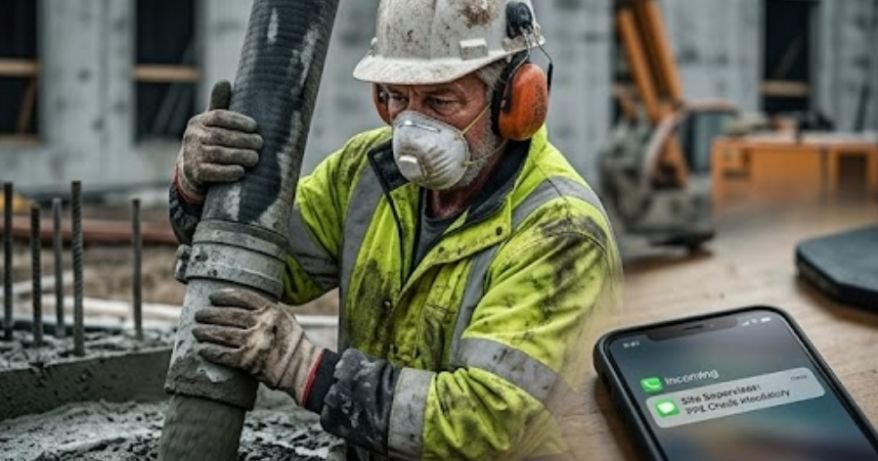
Setting up ppe requirements for construction sites requires an organized system that ensures every crew member stays protected throughout the day.
- First, complete a thorough site hazard evaluation every morning to identify changing environmental conditions, physical hazards, and task risks. Match these findings directly to ANSI and ASTM compliant safety gear before letting workers onto the active project site.
- Second, create a centralized equipment inspection checkpoint near the site entrance for daily gear verification. Direct workers to check hard hat shells for cracks, examine glove surfaces for tears, and ensure safety glasses sit flush. Immediately tag and destroy any worn or defective equipment to prevent accidental reuse on site.
- Third, host brief weekly safety talks focusing on proper equipment adjustment, cleaning methods, and storage standards. Teach workers how to adjust harness straps correctly, check respirator face seals, and clean protective lenses safely.
- Fourth, establish a well-stocked backup inventory inside your site office to replace damaged gear instantly. Keeping various glove sizes, extra safety glasses, and fresh earplugs available guarantees subcontractors and visitors remain compliant at all times.
- For a complete and detailed breakdown of compliance standards, consult official regulatory resources or safety equipment providers to maintain total site protection.
Frequently Asked Questions
1. What PPE is required for construction sites?
Standard requirements mandate hard hats, ANSI-rated safety glasses, high-visibility apparel, sturdy work boots, heavy-duty gloves, full-length pants, and sleeved shirts. Task-specific work adds fall harnesses, earplugs, or respirators.
2. What are the minimum PPE requirements for construction sites?
Minimum baseline site gear includes an ANSI Z89.1 hard hat, ANSI Z87.1 safety glasses, a high-visibility vest, durable work boots, full pants, and a sleeved shirt.
3. What are the OSHA requirements for PPE?
OSHA standard 29 CFR 1926 Subpart E mandates that construction employers evaluate workplace hazards, supply properly fitting approved gear at no cost, and train all workers.
4. What PPE should be worn on a construction site?
Always wear basic protective gear including hard hats, safety glasses, high-visibility vests, gloves, and safety boots. Supplement with task-specific gear like hearing protection, respirators, or fall arrest harnesses when hazards dictate.
Safety Gear Rules That Keep Your Site Rocking
Understanding and enforcing ppe requirements for construction sites protects your most valuable asset: the dedicated crew building your project every day. By pairing top-grade ANSI equipment with proper fit standards and regular training, you eliminate preventable hazards while keeping work on schedule. Upgrade your job site compliance program today to build a safer, happier, and far more productive construction environment.