Staying fully safe around microscopic particles requires a solid understanding of proper personal protective equipment. When dealing with infectious pathogens floating through the air, relying on standard clinical gear simply will not cut it. Equipping yourself with the right PPE for airborne precautions protects healthcare personnel, patients, and frontline teams from dangerous invisible risks.
Key Takeaways
- Masks Are Not Enough: Airborne precautions require a NIOSH-approved N95 or PAPR rather than a loose surgical mask.
- Full-Body Shield: You must combine respiratory defense with fluid-resistant gowns, protective eyewear, and clean gloves.
- Room Controls Matter: Patients need specialized Airborne Infection Isolation Rooms with negative pressure and HEPA filtration.
- Sequence Is Crucial: Following a strict sequence for putting on and taking off gear prevents accidental self-contamination.
- Always Check Seals: Performing a user seal check every single time you put on a respirator ensures complete air filtration.
Why PPE for Airborne Precautions Matters?
Think of airborne pathogens like uninvited party crashers who float in the air for hours! Microscopic germs like tuberculosis, measles, and chickenpox hang out in tiny droplet nuclei waiting to hijack your lungs.
Standard surgical masks act like open screen doors against these invisible critters. Wearing proper PPE for airborne precautions creates an airtight space suit that keeps you safe, stylish, and completely immune to floating microbial chaos.
Core Elements of Airborne Isolation Setup
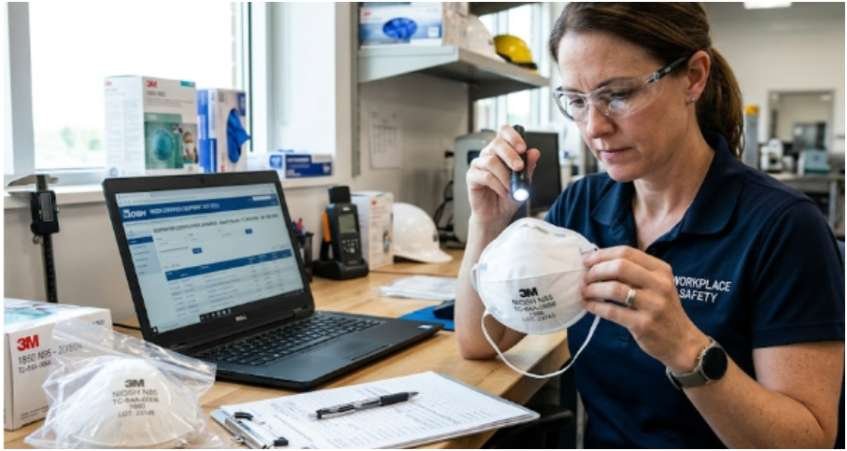
Airborne precautions require a fit-tested NIOSH-approved N95 or higher-level respirator, gloves, a protective gown, and eye protection like goggles or a face shield. This specialized equipment is mandatory when caring for patients diagnosed with infectious conditions spread through suspended droplet nuclei. Knowing how every piece works together ensures complete physical defense.
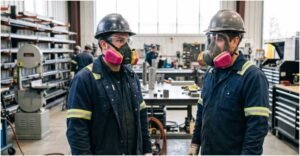
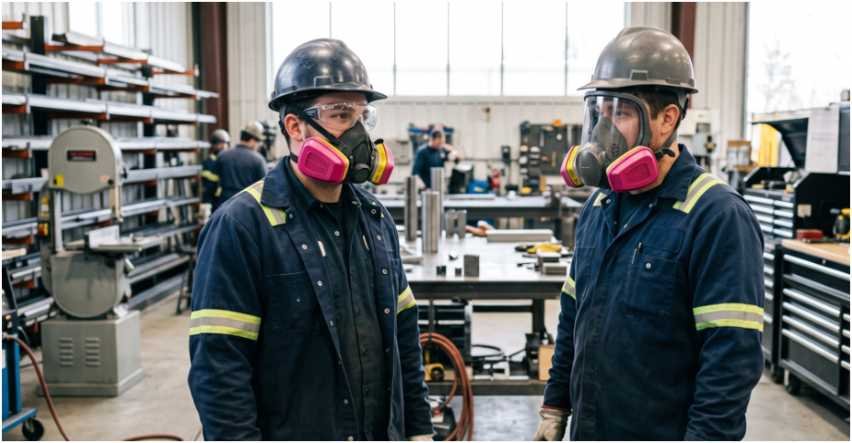
The same hazard-based selection principle also applies to PPE requirements for construction sites, where workers must match respirators, gloves, eye protection, clothing, and other equipment to the specific risks present rather than relying on one standard set of gear.
Superior Respiratory Protection Gear
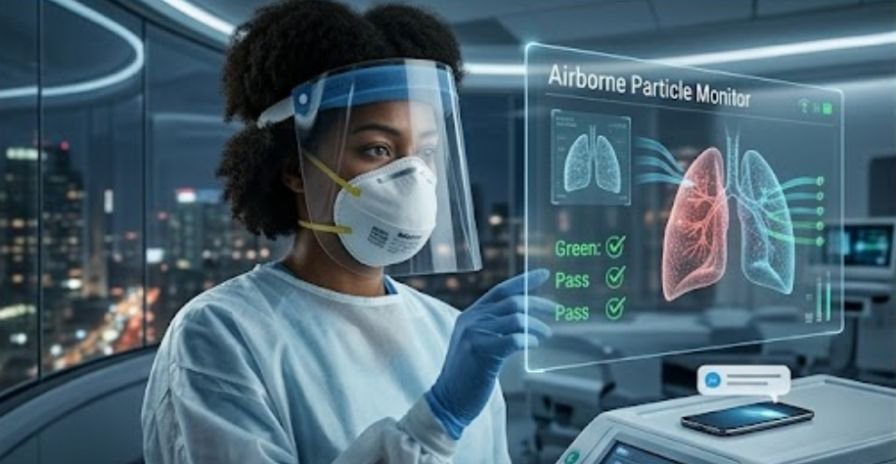
An N95 or higher respirator like a powered air-purifying respirator must be put on before entering the patient room and removed only after leaving the room entirely. These devices filter out tiny airborne particles smaller than five micrometers, providing a tight facial seal that loose medical masks cannot achieve.
Safe Patient Placement Standards

Patients requiring airborne isolation must be placed inside a specialized Airborne Infection Isolation Room. These clinical rooms feature negative air pressure relative to surrounding corridors and exhaust air through high-efficiency particulate air filtration systems to prevent airborne pathogens from escaping into clean hallways.
Patient Transport Protocols
Limiting patient movement outside their designated isolation room is essential to prevent hospital-wide particle dissemination. When transport becomes medically necessary, the patient must wear a standard surgical mask to contain infectious respiratory secretions at the source during movement through common hallways.
Step-by-Step How to Don and Doff PPE for Airborne Precautions
Always apply and remove your safety gear in a specific order to prevent self-contamination. Following a structured procedure keeps hazardous micro-particles far away from your skin, clothing, and mucous membranes.
Putting On Your Gear Properly
Begin by securing your fluid-resistant gown tightly around your neck and waist to cover your torso completely. Next, place your N95 respirator over your face, adjust the flexible metal nose bridge using both hands, and perform a user seal check to confirm no air leaks. Position your eyewear securely over your face, then finish by pulling clean gloves on so they stretch over the wrist cuffs of your gown.
Taking Off Gear Without Contamination
Start doffing by removing your gloves first because they accumulate the highest concentration of surface contamination. Remove your protective eyewear by touching only the clean headbands or earpieces, unfasten your gown ties to roll it inside-out away from your body, and step outside the room before removing your respirator by its elastic straps without touching the front filter.
Understanding Airborne vs. Droplet vs. Contact Precautions
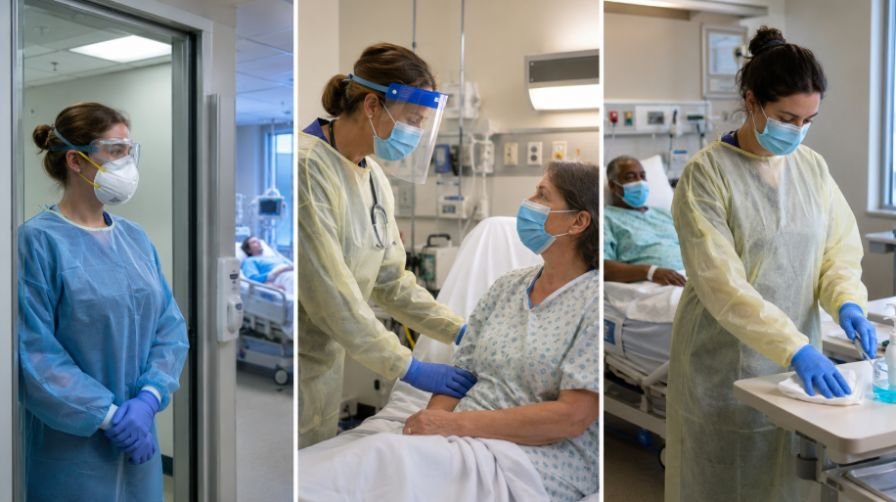
Although the terms airborne, droplet, and contact precautions are sometimes used interchangeably, they address different methods of disease transmission and require different protective measures.
Airborne precautions are designed for diseases spread by tiny infectious particles that can remain suspended in the air for long periods and travel beyond the immediate area around a patient. Conditions such as tuberculosis, measles, and chickenpox require this highest level of respiratory protection.
Droplet precautions apply to illnesses spread through larger respiratory droplets, which typically travel only short distances before settling onto nearby surfaces. Influenza and pertussis are common examples. Contact precautions focus on preventing infections transmitted through direct physical contact or contaminated surfaces, making gloves and gowns especially important.
Understanding these distinctions helps healthcare professionals choose the correct PPE and isolation procedures, reducing the risk of healthcare-associated infections while protecting both patients and staff.
Healthcare teams should also understand the levels of personal protective equipment, since the required combination of respiratory protection, gowns, gloves, and eye protection changes according to the severity and type of exposure risk.
Best Practices for PPE Storage and Disposal

Proper storage and disposal of PPE are just as important as wearing it correctly. Respirators, gowns, gloves, and protective eyewear should be stored in a clean, dry location away from direct sunlight, excessive heat, and moisture to preserve their protective qualities.
Healthcare facilities should routinely inspect PPE supplies to ensure they remain undamaged and within their recommended shelf life. After patient care, disposable PPE should be removed carefully and discarded according to facility infection-control policies and biomedical waste regulations.
Reusable equipment, such as goggles or face shields, should be thoroughly cleaned and disinfected following the manufacturer’s instructions before being used again. Consistently following proper storage and disposal practices helps reduce cross-contamination, maintains equipment effectiveness, and supports a safer healthcare environment for everyone.
Frequently Asked Questions
1. What type of PPE is used for airborne precautions?
Airborne isolation requires a NIOSH-approved N95 or higher respirator, fluid-resistant gown, protective gloves, and eye shielding like goggles or a face shield. This full combination prevents aerosol exposure.
2. What PPE for airborne isolation?
You need a fit-tested respirator, fluid-resistant gown, protective eyewear, and gloves. You must also place the patient inside a negative pressure room equiPPEd with specialized air filtration.
3. Do you wear a N95 for airborne precautions?
Yes, healthcare personnel must wear a fit-tested NIOSH-approved N95 or higher-level respirator whenever entering an airborne precaution room to block tiny floating particles.
4. What are 4 items of PPE droplet precautions?
The four key items include a standard surgical mask, eye protection like a face shield, a fluid-resistant isolation gown, and disposable gloves to shield against larger liquid splashes.
Gear Up, Stay Safe, and Breathe Easy!
Mastering proper PPE for airborne precautions guarantees that you stay completely protected against dangerous floating pathogens. By equipping top-tier respirators, respecting negative pressure room controls, and executing flawless donning and doffing sequences, you create a fortress of safety for yourself and your team. Keep your gear fitted tightly, follow clinical protocols, and make safety your daily routine!